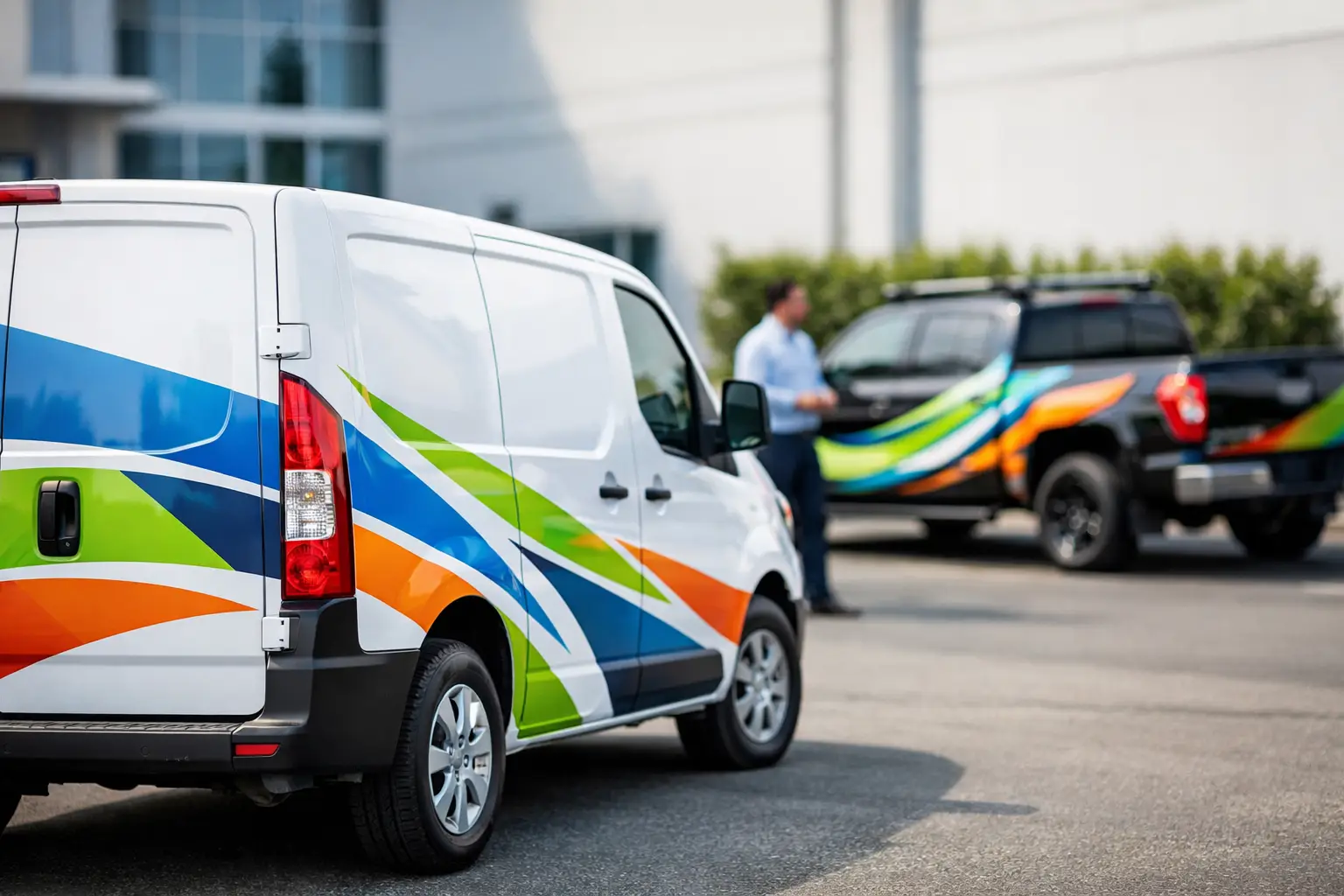
A work vehicle already travels where local customers live, shop, and make buying decisions. Vehicle decals for business advertising turn that daily travel into a clear, professional message for your company. Whether your team is parked at a job site in Lancaster, making deliveries in Palmdale, or moving between appointments across Southern California, the right decal helps people remember who did the work.
For local service businesses, this visibility can be especially valuable. A homeowner may not need a plumber, landscaper, contractor, or cleaning company at the exact moment they see a vehicle. But a clean, memorable vehicle design can put your name in front of them before the need arises. When they later need the service, a familiar name has an advantage.
Why Vehicle Decals for Business Advertising Matter
A vehicle graphic is not a one-day promotion. Once installed, it keeps working during service calls, supply runs, deliveries, and normal commuting. There is no recurring postage, no ad placement schedule, and no need for a customer to search for your business before seeing your message.
That does not mean every business needs a full vehicle wrap. A well-designed door decal, rear-window graphic, or set of lettering can create a strong local presence at a more manageable cost. The best choice depends on your vehicle type, the amount of information customers need, and how often the vehicle is seen in your service area.
Vehicle decals also support the professional impression customers form when your team arrives. A marked vehicle can help a customer feel more confident that the person at the door represents the business they hired. For businesses that send technicians, crews, or delivery drivers into neighborhoods, that recognition matters as much as the advertising value.
Start With the Message Drivers Can Read
The most common mistake in vehicle advertising is trying to fit a brochure onto a door. People usually see a moving vehicle for only a few seconds. They need to understand what you do and how to identify you almost immediately.
Your business name or logo should be the strongest visual element. Next, include a short description of the service if the name does not make it obvious. A company called “Smith & Sons” may need “Heating and Air Conditioning” or “Residential Landscaping” beneath the logo. A readable phone number, website, or simple call to action can follow, but only if it does not crowd the design.
Think in terms of one main message. A roofing company may lead with “Roof Repair and Replacement.” A real estate professional may lead with a name, brokerage identity, and phone number. A restaurant delivery vehicle may feature the restaurant name and a short ordering prompt. Customers should not have to study the design to understand the offer.
Use Large Type and Strong Contrast
Small lettering disappears at a traffic light, in a parking lot, or from the next lane. Large type gives your information a better chance of being read at a glance. Script fonts and decorative type can look attractive on a screen but may be difficult to read on a moving vehicle.
Color contrast is equally important. Dark lettering on a light vehicle, or light lettering on a dark vehicle, generally provides the best visibility. If your brand colors are low contrast, use a background shape or outline that protects readability without changing the overall brand look.
Avoid relying on a QR code as the main response method. It can be a useful addition on a parked vehicle, especially near the rear, but drivers should never need to scan a code to understand who you are or what you offer. Your business name and contact method need to stand on their own.
Design for the Vehicle, Not Just the Artwork
Every vehicle has door handles, seams, windows, wheel wells, body curves, and fuel doors. Artwork that looks balanced on a flat design proof can become awkward when important text crosses these features. Proper production planning accounts for the usable space on each vehicle panel.
The side doors often carry the primary message because they receive the most exposure in traffic and at job sites. The rear of a van, truck, or SUV is another valuable location because people may sit behind it at intersections. Window decals can add visibility, but they should not interfere with safe driving or create a cluttered appearance.
Before production, review the layout at realistic size. A professional print provider can help confirm that lettering, logos, and contact information are placed for visibility and clean installation.
Choosing Decals, Lettering, or Magnets
There is no single right format for every business. The best option depends on how permanent you want the message to be, the vehicle’s condition, and how frequently the vehicle is used for work.
Vinyl decals and cut lettering are a practical choice for company-owned vehicles that represent the business regularly. They can display logos, service descriptions, phone numbers, and branded graphics with a polished finish. Quality materials and correct installation are important, especially under intense Southern California sun, where low-grade materials can fade, crack, or lift sooner than expected.
Vehicle magnets work well when flexibility is the priority. An owner who uses the same vehicle for personal and business purposes may prefer magnets that can be removed after hours. They are also useful for temporary campaigns or for adding branding to a short-term vehicle. The trade-off is that magnets usually offer less design flexibility and require regular cleaning behind the magnet to prevent trapped moisture and dirt from affecting the finish.
Full wraps offer the largest visual impact and can create a highly recognizable fleet. They are often a good fit for companies with several vehicles on the road every day or businesses that depend heavily on local name recognition. They also require a larger investment and more thoughtful design, so they make the most sense when the vehicle will remain in service long enough to justify the cost.
Keep Branding Consistent Across Local Marketing
Your vehicle should look like the rest of your business, not like a separate campaign. Use the same logo, colors, service language, and contact details that appear on your business cards, brochures, postcards, door hangers, banners, and yard signs.
Consistency makes every impression stronger. A homeowner who receives a postcard, later sees one of your vehicles, and then notices your yard sign near a completed project is more likely to remember the name. Each piece reinforces the others. That is especially useful for businesses trying to build recognition within specific neighborhoods, ZIP codes, or service routes.
If you are running a seasonal offer, consider whether it belongs on the vehicle. Permanent vehicle graphics should usually focus on your core business identity rather than a short-term discount. A removable decal or magnet can be a better way to promote a limited event, grand opening, seasonal service, or hiring campaign.
Protect Your Investment With Quality Production
Vehicle advertising is seen up close as well as from a distance. Customers may notice crooked placement, pixelated artwork, faded color, or peeling edges before they ever call. Those details can affect how they judge the quality of your work.
Start with high-resolution logo files and clear brand standards when available. If your artwork needs adjustment, resolve it before printing rather than accepting a design that is difficult to read or reproduce. Material selection should match the vehicle surface and the expected length of use. Installation should be completed on a clean, properly prepared surface so the decal adheres as intended.
After installation, follow the care guidance for the material. Regular washing helps maintain a professional appearance, but avoid harsh abrasives and high-pressure washing directly along decal edges. Inspect graphics periodically, particularly after long periods of sun exposure or heavy road use.
Measure What the Decal Is Doing for Your Business
Vehicle advertising is partly a branding investment, so not every result will arrive as an immediate phone call. Still, you can track its value. Ask new customers how they heard about you, train staff to record “saw your truck” or “saw your van” as a lead source, and use a dedicated phone number or short web address if you want more precise attribution.
Look beyond direct leads as well. A vehicle decal can support customer trust, make crews easier to identify, strengthen referral recognition, and give your business a more established presence in the community. For a company with multiple service vehicles, those impressions add up quickly over months of regular travel.
JR’S Handling can help local businesses produce professional vehicle decals that fit their brand, vehicles, and marketing goals. A clear design, quality materials, and dependable production give your company a mobile message that keeps representing you long after the vehicle leaves the parking lot. Give us a try today, and make every mile part of your local advertising effort.