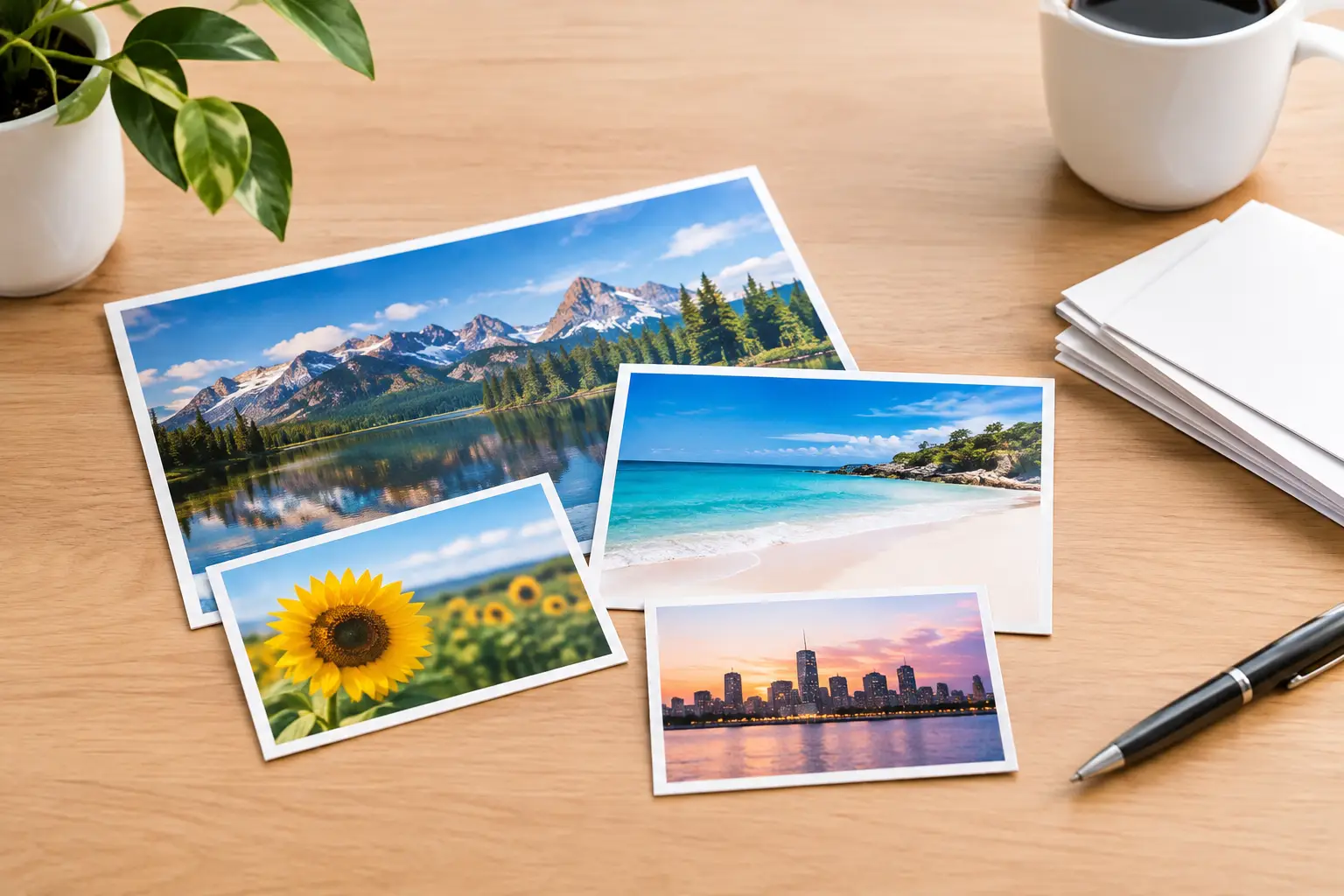
A postcard has only a few seconds to earn attention between the mailbox and the kitchen counter. That is why choosing among the top postcard size options is more than a design decision. The size affects what your message can say, how visible it feels, what it costs to print and mail, and whether it suits the customers you want to reach.
For a local business in Lancaster, Palmdale, or the surrounding Southern California area, the right format should support one clear goal: getting more people to act. A compact postcard can be an efficient choice for a repeat offer. A larger piece can give a grand opening, real estate listing, or seasonal promotion the space it needs to stand out. The best size depends on the offer, the mailing area, and how often you plan to mail.
Top Postcard Size Options for Business Campaigns
Most direct-mail campaigns use a small group of proven postcard sizes. These formats are familiar to printers, practical for mailing, and flexible enough for everything from restaurant coupons to service reminders.
4 x 6 postcards: efficient and focused
The 4 x 6 postcard is a common choice for businesses that need to reach a large number of households while keeping production and postage costs controlled. It is compact, easy to handle, and works well when the message is simple: a special offer, appointment reminder, coupon, event announcement, or introduction to a local service.
This size is strongest when the front has one clear visual and the back has an easy-to-read call to action. A plumber might feature a seasonal inspection offer. A salon could promote a first-visit discount. A restaurant can put a limited-time meal deal front and center.
The trade-off is space. If you need several service categories, multiple photos, detailed pricing, a map, and a testimonial, a 4 x 6 card can become crowded quickly. Trying to fit too much on it weakens the message and makes the card easier to ignore.
5 x 7 postcards: more room without feeling oversized
A 5 x 7 postcard is a practical middle ground for many small and midsize businesses. It provides noticeably more room for a strong image, readable headline, offer details, and contact information while still feeling like a manageable mail piece.
This format is a good fit for real estate professionals promoting a listing or neighborhood expertise, retailers announcing a sale, and service businesses that want to explain a few key benefits. It also gives designers more flexibility to use white space, larger type, and a stronger brand presentation.
For campaigns that need more than a coupon but do not require an oversized mailer, 5 x 7 often delivers the right balance of visibility and cost. It can be especially effective for businesses building name recognition in a defined local area over several mailings.
6 x 9 postcards: built for stronger visibility
When the goal is to make a bigger impression, 6 x 9 postcards are a dependable choice. Their larger footprint is easier to notice in a stack of mail, and the additional space makes room for more persuasive content without forcing a cramped layout.
A 6 x 9 format works well for home improvement companies, medical and dental offices, auto services, fitness centers, schools, and event promotions. It gives you room to lead with a bold image or headline, then support the offer with service details, testimonials, before-and-after photos, or a coupon.
The larger card usually costs more than a standard 4 x 6 piece, both in printing and postage. That additional expense can be worthwhile when the promotion has a higher customer value. For example, a roofing contractor, remodeler, or real estate agent may benefit more from a mailer that communicates credibility and captures attention than from the lowest-cost format.
6 x 11 postcards: high-impact local advertising
A 6 x 11 postcard is designed for campaigns that need to be seen. This oversized format gives a business a strong presence in the mailbox and substantial room for high-quality photography, larger offers, service lists, and clear response instructions.
It is often a smart choice for grand openings, major sales, community events, political outreach, real estate campaigns, and businesses with multiple services to promote. A home services company, for example, can show its primary services, financing message, customer review, and seasonal offer on one piece without overwhelming the reader.
Because it is a larger investment, the 6 x 11 size is not automatically the best choice for every campaign. It makes the most sense when your offer is valuable, your design is strong, and your mailing list is targeted. Mailing a larger card to the wrong audience is still wasted spend. Mailing a well-designed larger card to households that match your ideal customer can produce a much better opportunity for response.
Choose Size Based on the Offer, Not Just the Budget
The lowest-cost postcard is not always the least expensive campaign. If a smaller card fails to explain the offer or gets lost among other mail, it may not produce enough calls, visits, or sales to justify the savings. On the other hand, an oversized card can be unnecessary if you are sending a straightforward coupon to an established customer list.
Start with the action you want the recipient to take. If the goal is to redeem a simple offer, schedule a service, or bring in a coupon, a 4 x 6 card may be enough. If the goal is to introduce your company, build trust, or promote a higher-ticket service, a 5 x 7 or 6 x 9 card gives the message more room to work.
Also consider frequency. Many direct-mail campaigns perform better through consistent repetition than a single large mailing. A business with a fixed monthly budget may see better results by mailing a focused 4 x 6 or 5 x 7 postcard regularly to the same service area. A business promoting a one-time event or a major seasonal sale may prefer the immediate presence of a 6 x 9 or 6 x 11 piece.
Design Space Changes How Customers Read Your Card
Postcard size should support a clean design, not invite more clutter. Every card needs room for a headline, a compelling image or visual, the offer, contact information, and a call to action. The mailing side also needs space for the recipient address, postal markings, and any required mailing information.
Keep the main message visible at a glance. Use a headline that tells people what you do or what they can receive. Make the offer specific when possible, such as a dollar amount, percentage discount, deadline, or service benefit. Then make it easy to respond with a phone number, website, store address, or QR code.
A larger postcard does not mean every inch should be filled. White space helps readers find the important information. Large type helps the offer get noticed. A professional photo or strong graphic can carry the message faster than a dense paragraph of copy.
Before printing, confirm that your artwork includes proper bleed, safe margins, and clear address placement. Postal requirements and mailing rates can vary based on the size, thickness, quantity, and mailing method. Reviewing the format before production helps prevent avoidable delays or redesign costs.
Match the Mailer to Your Mailing Strategy
Your postcard format and your mailing strategy should work together. A targeted customer list can help a larger, more detailed postcard reach households most likely to need your service. A broad neighborhood campaign may call for a more cost-efficient format that can be mailed consistently across a defined area.
For businesses using Every Door Direct Mail, postcard dimensions must meet program requirements. Oversized formats are commonly used because they provide strong mailbox presence while supporting neighborhood-based distribution. For addressed direct mail, the right size may depend more on the quality of the mailing list, the offer, and the postage category.
This is where an experienced print-and-mail partner saves time. Instead of coordinating artwork, printing, addressing, sorting, and postal delivery through separate vendors, you can plan the campaign as one process. JR’S Handling helps businesses coordinate professional postcard printing and direct-mail execution so the format, mailing details, and campaign goal are considered together.
A postcard should make it easy for the right customer to recognize your offer and take the next step. Choose the size that gives your message enough room to do that job well, then put it in front of the households most likely to respond. Give us a try today when you are ready to turn a local mailing into a practical opportunity for business growth.