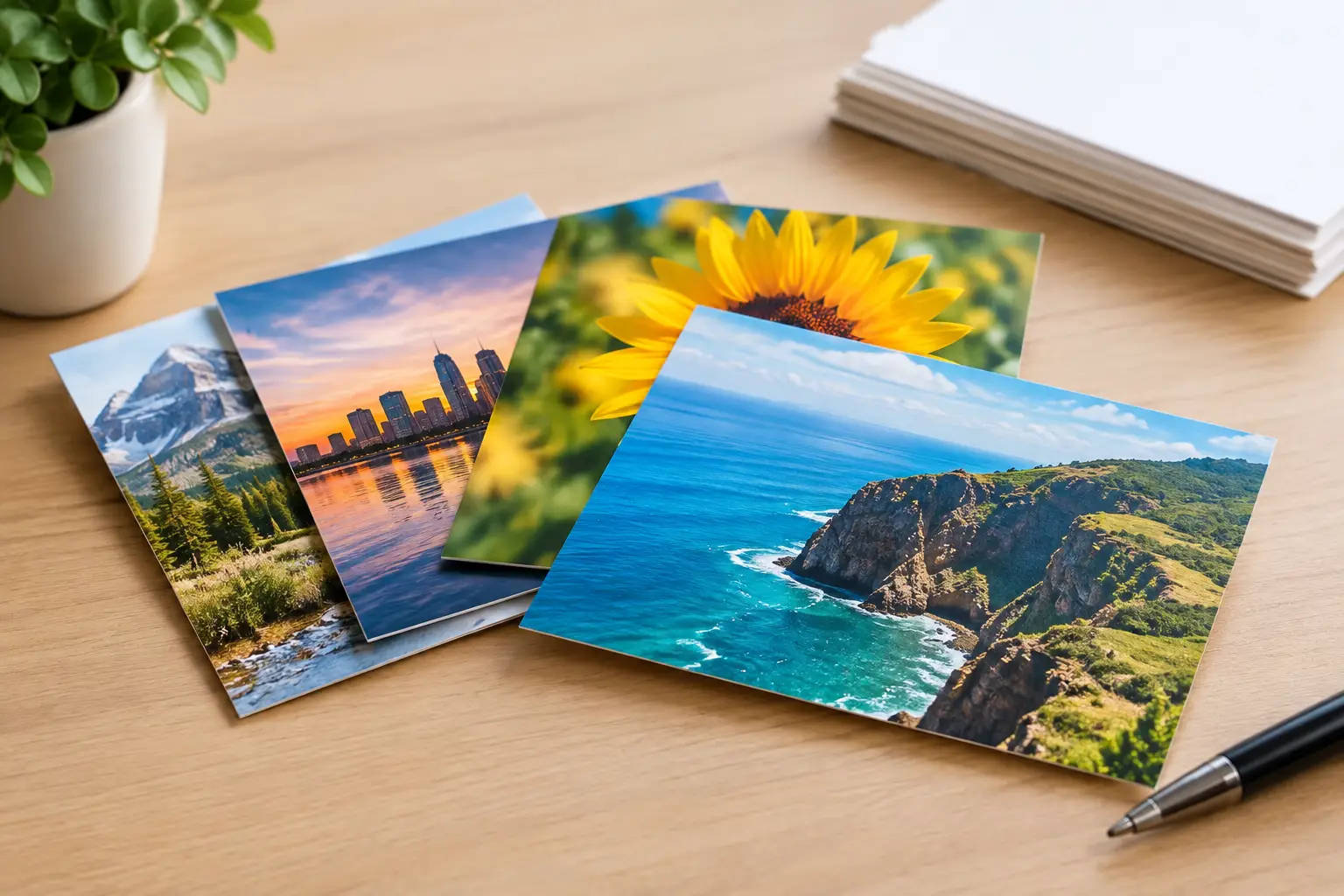
A postcard has only a few seconds to earn attention at the mailbox. That is why high impact postcard formats are about more than choosing a larger sheet of paper. The right format gives your offer room to stand out, supports a professional presentation, and makes it easier for customers to know what to do next.
For businesses in Lancaster, Palmdale, and throughout Southern California, postcard marketing can put a promotion directly in front of homeowners, local shoppers, and business decision-makers. The best choice depends on your goal, your mailing audience, the amount of information you need to share, and what you need the campaign to produce.
Start With the Offer, Not the Postcard Size
A postcard format should support the message. A restaurant introducing a limited-time special, a realtor announcing an open house, and a home-service company promoting a seasonal inspection all have different needs. Trying to use the same size and design approach for every campaign can make the message feel crowded or easy to overlook.
If your offer is simple and urgent, a standard postcard may be enough. A strong headline, one attractive image, a clear offer, and your phone number can do the job. If you are explaining several services, presenting before-and-after photos, or giving customers multiple reasons to respond, a larger format gives you more space without forcing tiny type or a cluttered layout.
The goal is not to say everything about your business. The goal is to make one offer understandable at a glance and give the recipient a reason to call, visit, scan, or save the card.
High Impact Postcard Formats for Local Campaigns
Standard 4 x 6 Postcards
A 4 x 6 postcard is compact, familiar, and cost-conscious. It works well for repeat promotions, appointment reminders, coupons, grand openings, and straightforward service offers. Because the available space is limited, this format calls for discipline. Use one primary message, one call to action, and a design that makes contact information easy to find.
This is often a practical option when mailing frequently to a defined customer list. A landscaping company may use it to promote spring cleanup. A salon may use it for a new-client offer. A club or event promoter may use it to create quick awareness for an upcoming date.
The trade-off is visibility. A smaller card can be effective, but it has to compete with the rest of the mail. Strong color, quality printing, a bold headline, and a clear offer matter even more in this format.
5 x 7 Postcards
The 5 x 7 size gives businesses noticeably more room while staying easy to handle and mail. It is a strong middle ground for companies that need to feature a service, provide a coupon, include a short list of benefits, or showcase a professional image.
For many local businesses, this is one of the most versatile formats. A dentist can feature a new-patient special with an office photo and service details. A real-estate professional can include a property image, recent sales information, and a request for a home-value consultation. A retailer can highlight a seasonal sale without making the design feel cramped.
Use the additional space carefully. More room should improve clarity, not create a wall of text. Keep the front focused on the strongest visual and offer, then use the back for supporting details, mailing information, and response instructions.
6 x 9 Postcards
When you need a postcard that is difficult to miss, 6 x 9 is a dependable choice. The larger surface gives your offer more presence in the mailbox and creates room for larger photography, bolder type, testimonials, service highlights, or multiple promotions.
This format works especially well for higher-value services where customers may need a little more information before responding. Contractors, medical offices, legal professionals, real-estate teams, automotive businesses, and financial service providers can use the space to build credibility while still keeping the offer direct.
A 6 x 9 postcard can also be useful when sending to a prospect list that has not heard from you before. New prospects need to recognize who you are, understand what you provide, and see a compelling reason to take action. A larger format helps deliver those points without sacrificing readability.
Oversized and Jumbo Postcards
Oversized postcards create immediate visual impact. They are well suited to major events, grand openings, election outreach, large retail promotions, property announcements, and campaigns where visibility is the main priority.
The advantage is obvious: more physical presence can help your piece stand apart from standard mail. The trade-off is that larger cards generally require a larger printing and mailing investment. They are most effective when the offer has enough value to justify that cost, such as a high-ticket service, a major sale, or an event with a meaningful revenue opportunity.
Before choosing a jumbo format, consider the mailing volume and expected response value. Sending an oversized card to a carefully selected local audience can be more productive than sending a smaller card to too broad an area. Good list selection and a clear offer still matter more than size alone.
Format Choices That Create a Better Response
Size gets attention, but the physical format and production choices shape how your postcard performs. A glossy finish can make product photography and colorful promotions stand out. A matte finish can feel more refined and may be easier for recipients to write on if you are including a coupon, appointment reminder, or personal note.
Full-color printing on both sides gives you the strongest opportunity to use the card well. The front should earn attention quickly. The back should support the response, with a readable message, contact details, mailing area, and a clear call to action such as “Call today,” “Bring in this card,” or “Schedule your estimate.”
Variable printing can make a campaign more relevant by adding names, neighborhood-specific information, unique offer codes, or personalized calls to action. This is especially useful for businesses that maintain customer lists or want to track different mailing segments. Personalization should feel useful, not forced. A name alone will not improve a weak offer, but relevant information can make the postcard feel more timely.
Keep the Mailing Side Clean and Compliant
The mailing panel is not leftover space. It must accommodate the recipient address, postage area, return address information, and postal requirements. A design that looks good on screen can become difficult to mail if the address area is too busy or important content is placed where postal markings belong.
This is where working with an experienced print-and-mail provider saves time. Production, mailing-list preparation, addressing, bulk-mail handling, and postal distribution all need to work together. If one step is missed, a strong postcard can be delayed or become more expensive than planned.
JR’S Handling helps businesses coordinate these details in one workflow, from professional postcard printing through direct-mail execution. That means you can focus on the offer and audience while your campaign is prepared for reliable distribution.
Match the Format to Your Audience
Your audience should influence the size and message just as much as your budget. A neighborhood mailing for a local plumber may benefit from a straightforward 4 x 6 or 5 x 7 card with a seasonal offer and an easy-to-read phone number. A real-estate farm campaign may benefit from a larger card that includes market information, a property photo, and a recurring brand presence.
For existing customers, familiarity can make a smaller, more frequent card effective. For prospects who do not know your company, a 5 x 7 or 6 x 9 format may give you the space needed to establish trust. Include practical proof points such as years in business, service area, licensing where applicable, customer benefits, or a focused testimonial.
Also consider how the customer is likely to respond. If most calls come from mobile devices, add a QR code only when it leads to something useful, such as a scheduling page, offer details, or a simple request form. Do not make scanning the only option. Your phone number and basic next step should always be clear on the card itself.
Design for a Decision, Not Just Attention
A high-impact card is not necessarily the busiest card. Crowded designs, too many fonts, competing offers, and small print can reduce response even when the postcard is large. Give the eye a clear path: headline first, offer second, response step third.
Use professional images that support the service or product. Avoid generic visuals when a photo of your work, team, location, product, or completed project can make the piece more credible. Consistent colors, logo use, and contact information also help customers recognize your business when they see your marketing again.
Before printing, ask one simple question: Can someone understand the offer and next step in five seconds? If the answer is no, revise the copy or layout. Direct mail works best when the message is immediate.
The right postcard format gives your business a better chance to be seen, remembered, and contacted. Choose the size that supports your offer, mail it to a well-defined audience, and give recipients one clear reason to respond. When the printing and mailing are handled with care, a postcard becomes more than a piece of paper – it becomes a practical tool for bringing new customers through the door.