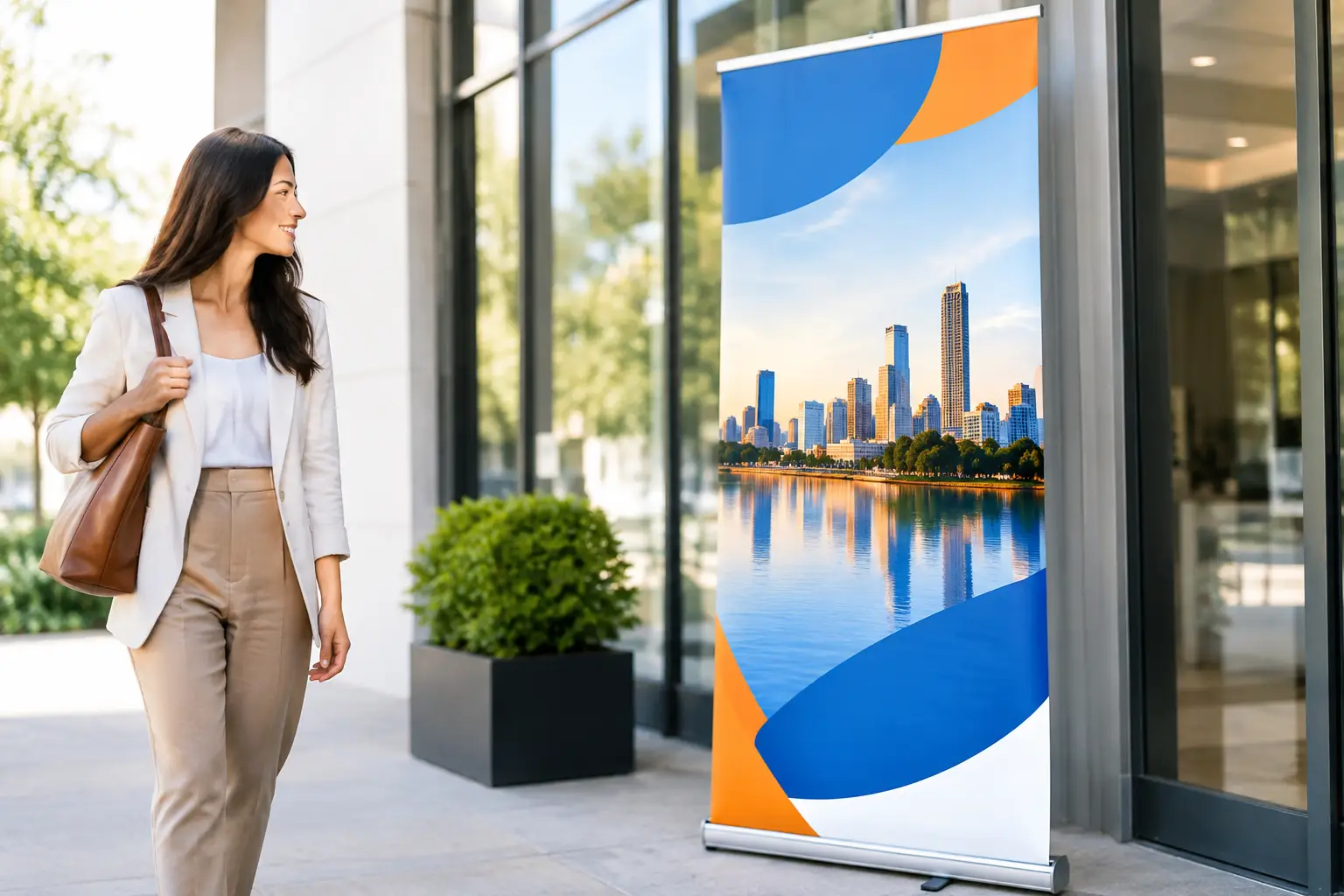
A banner has only a few seconds to do its job. A driver passes your storefront, a shopper walks by your booth, or a guest enters an event. Your message needs to be easy to see, easy to understand, and professional enough to build confidence in your business. Well-produced print banners give local businesses a practical, high-visibility way to promote offers, events, services, and brand recognition.
For businesses in Lancaster, Palmdale, and throughout Southern California, banners remain one of the most cost-effective ways to put a message in front of people where they live, work, shop, and gather. The right banner is not simply a large sign. It is a focused marketing tool built around a specific location, audience, and action.
Start With the Job Your Banner Needs to Do
Before choosing a size or material, decide what success looks like. A grand-opening banner needs to create immediate awareness. A trade show banner needs to identify your business and start conversations. A contractor banner may need to make a phone number visible from the street. An event banner may need to direct visitors to registration, parking, or a sponsor area.
That purpose should guide every production decision. Trying to place your company history, every service, multiple photos, and several calls to action on one banner usually weakens the result. A banner works best when it communicates one main message quickly.
For example, a restaurant promoting a limited-time special may lead with the offer and a large deadline. A real estate professional may use a clean property message, name, phone number, and brokerage branding. A local service company might feature the service category, a clear benefit, and a simple way to call or request an estimate.
If customers need more information before they act, use the banner to get their attention first. Then support it with postcards, fliers, brochures, or a direct-mail campaign that provides more detail.
Choosing the Right Print Banners for the Location
The best material depends on where the banner will be displayed and how long it needs to last. Indoor banners generally have fewer weather concerns and can prioritize visual presentation. Outdoor banners must handle sun, wind, moisture, and repeated use.
Vinyl is a common choice for business banners because it is durable, versatile, and suitable for many indoor and outdoor applications. It works well for storefront promotions, construction sites, event announcements, sales messages, and community activities. For a banner displayed in a windy area, mesh material can be a smarter option because its small openings allow some air to pass through. This can reduce stress on the banner and mounting hardware.
Fabric banners can provide a more polished appearance for indoor displays, presentations, or trade show spaces. They are often a good fit when the banner will be viewed at close range and used in a controlled environment. However, fabric may not be the practical choice for a long-term outdoor installation.
Finishing matters as much as the printed surface. Grommets provide reinforced holes for hanging, while hems add strength around the edges. Pole pockets can be useful for banners that hang from rods or frames. The right finishing option depends on the installation method, so it is worth discussing where and how the banner will be used before it goes to print.
Size Is About Viewing Distance
Bigger is not always better, but a banner that is too small for its location will not deliver much value. The right size is tied to viewing distance and available space.
A banner near an entrance can use smaller text because visitors will stand close to it. A banner facing a busy street needs larger lettering that can be read by people driving or walking past. When a message must be seen from a distance, the headline should be the largest element on the banner, followed by the business name or primary offer. Contact details should be large enough to read without forcing viewers to stop.
Consider the installation area as well. Measure the wall, fence, storefront window, booth frame, or other display location before finalizing the size. A banner that fills the space appropriately looks intentional. One that is squeezed into an awkward area or leaves too much empty room can make a professional message look like an afterthought.
Orientation also affects readability. Horizontal banners work naturally across storefronts, fences, and tables. Vertical banners can be effective beside entrances, in lobbies, or at events where floor space is limited. The format should match the location rather than forcing the location to fit the design.
Design for Fast, Clear Reading
A banner is not a brochure. People should understand its main point almost immediately. That requires a design that gives the eye a clear path: headline first, supporting message second, contact information or call to action last.
Use a short headline with a direct benefit or announcement. “Now Hiring,” “Grand Opening,” “Free Estimates,” or “Ask About Our Summer Special” can be more effective than a sentence packed with details. Keep the message connected to your audience and the location. A banner outside a retail shop can promote a current offer, while a banner at a community event may focus on your business name and what you provide.
High contrast is essential. Dark text on a light background or light text on a dark background is typically easier to read than colors with similar brightness. Brand colors should be part of the design, but they should not make the message difficult to see. A low-contrast banner can look attractive up close and still fail from across a parking lot.
Use high-resolution logos and images. A photo that looks acceptable on a phone screen may appear blurry when enlarged for a banner. If you are unsure whether your artwork is print-ready, providing the original logo file, original photo, or existing marketing materials gives your printer a better starting point.
Avoid crowding the design with too many fonts, decorative effects, or small print. Details such as website addresses, license numbers, and social media handles may be necessary in some cases, but they should not compete with the primary message. If an element cannot be read from the intended viewing distance, it may be better placed on another piece of marketing material.
Match Placement to Customer Traffic
A strong banner in the wrong location will not produce the attention you want. Think about where your customers are already looking and traveling. Storefront windows, exterior walls, fences, event entrances, vendor booths, job sites, and parking lot areas can all be effective placements when they are permitted and visible.
For outdoor use, check the viewing angle. A banner should face the direction of approaching traffic whenever possible. Make sure landscaping, parked vehicles, poles, or building features will not block the message. If the banner is positioned near a road, keep the design especially simple. Drivers have limited time to read it safely.
Indoor banners can guide visitors through a space. Use them to identify a check-in area, promote a seasonal offer near a point of purchase, recognize sponsors, or direct guests toward a service counter. Event organizers often get better results by placing several coordinated signs along the customer path instead of relying on one banner at the entrance.
Local regulations, property rules, and event requirements can affect banner size, placement, and duration. Confirm those details before production so your investment can be displayed as planned.
Plan Production Early Enough to Get It Right
Banners are often ordered because an event, sale, or opening date is approaching fast. Fast production can be helpful, but a little planning protects you from costly mistakes. Build in time to confirm dimensions, review artwork, approve the proof, and arrange installation.
Provide the exact wording, preferred colors, logo files, contact information, and deadline at the beginning of the project. If the banner supports a larger promotion, share the postcard, flier, or other campaign pieces too. Matching colors, offers, and wording across materials creates a more professional customer experience.
JR’S Handling helps businesses coordinate banners along with the printed marketing pieces that support local outreach. Working with one experienced print provider can reduce back-and-forth, keep your branding consistent, and help you avoid production details that are easy to miss when you are managing a busy business.
A banner should earn its space by giving people a clear reason to notice your business. Choose a message your customers can understand at a glance, produce it for the conditions where it will be displayed, and make every word easy to read. Give us a try today when you are ready to put your next promotion where customers can see it.