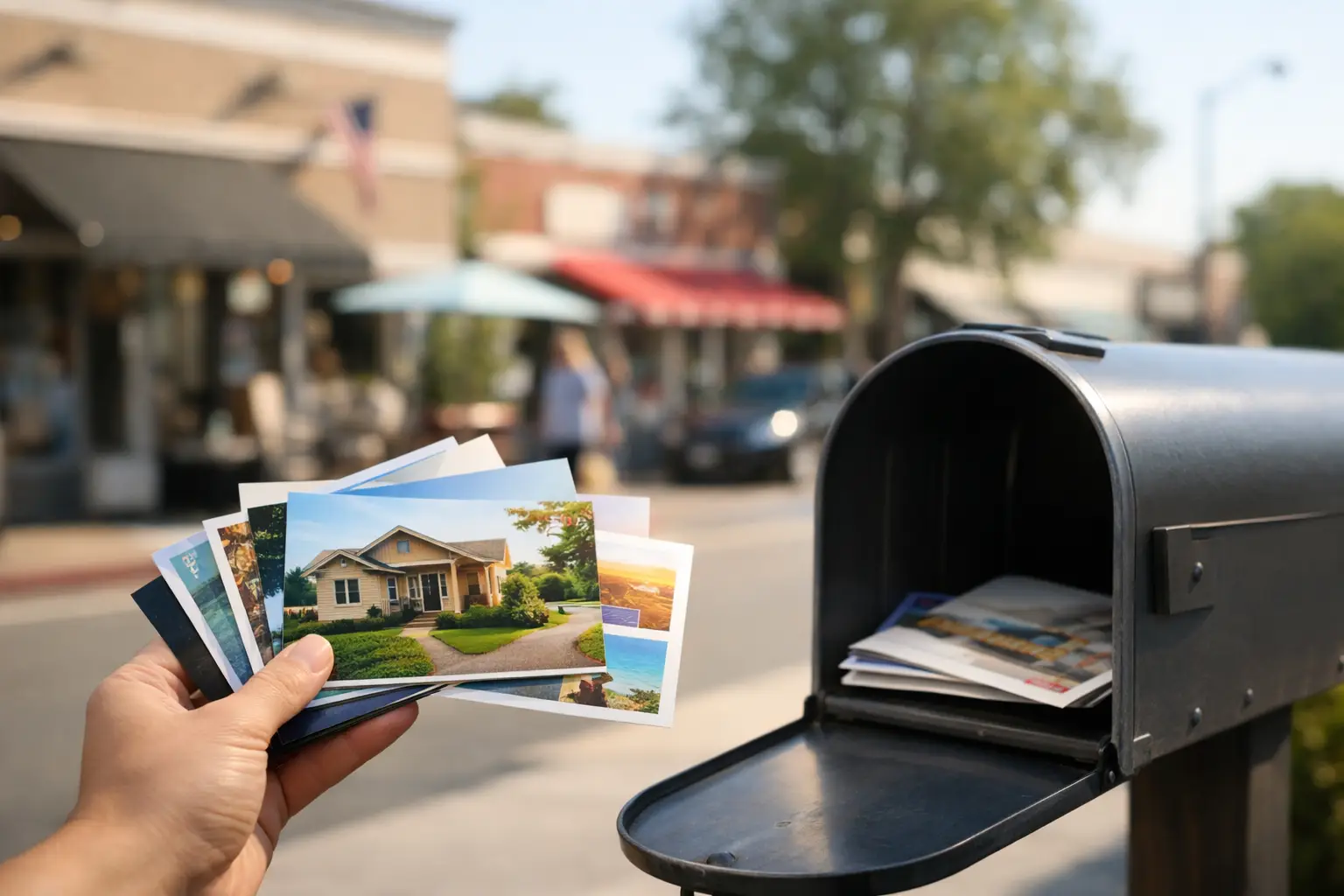
A well-planned postcard mailing service gives local businesses something digital advertising often cannot: a physical, full-color message placed directly in the hands of households and prospects in the neighborhoods that matter most. For a restaurant promoting a grand opening, a real estate professional announcing new listings, or a home-service company building its customer base, postcards create a clear opportunity to be seen, remembered, and contacted.
The results do not come from simply printing a stack of cards and putting them in the mail. Effective direct mail depends on the right audience, a professional design, dependable production, and accurate postal preparation. When those parts work together, postcard campaigns can help businesses generate calls, website visits, event attendance, and repeat local awareness without requiring the business owner to coordinate several vendors.
What a Postcard Mailing Service Handles
A postcard mailing service manages the practical work between a marketing idea and a delivered mail piece. This can include printing, mailing-list support, address processing, postal sorting, bulk-mail preparation, and delivery to the United States Postal Service. Instead of arranging printing with one company, purchasing a list from another, and finding a mail house to complete distribution, a business can keep the project in one coordinated workflow.
That matters because direct mail has details that affect both cost and delivery. Mail pieces need the right size, paper stock, addressing area, postage treatment, and sorting setup. Addresses must be reviewed for formatting and duplicates. Mailing lists should be selected based on the campaign goal rather than treated as an afterthought. An experienced provider helps prevent avoidable delays, wasted postage, and boxes of postcards that never make it to the intended audience.
For businesses in Lancaster, Palmdale, and throughout Southern California, local reach is often the point. A mailing can focus on neighborhoods near a storefront, ZIP codes served by a contractor, households around a new development, or specific customer types within a wider service area. The campaign should match how and where the business actually earns customers.
Start With the Customer You Want to Reach
The best postcard campaigns begin with a practical question: who is most likely to respond to this offer? A broad mailing may make sense for a grand opening, seasonal sale, community event, or brand-awareness push. A more selective list can be a better investment when a business serves particular household types, income ranges, business categories, or geographic areas.
A local plumbing company, for example, may want to mail homeowners in established neighborhoods within its service radius. A gym may focus on nearby households and add a time-sensitive introductory offer. A real estate team may select neighborhoods where it has recent sales activity and use the postcard to show local market knowledge. The offer, message, and list should support one another.
Existing customers are another valuable audience. A postcard can bring back past buyers, promote a new service, remind customers about seasonal maintenance, or encourage referrals. Mailing to a house list is often cost-effective because the recipients already know the business. It also gives businesses a reason to keep customer records current and organized.
List quality is more valuable than raw quantity. Mailing 10,000 postcards to people with little reason to care can cost more than reaching 2,500 well-matched prospects with a relevant offer. The right volume depends on the service area, budget, customer value, and how many new leads the business can handle.
Make the Postcard Easy to Understand
A postcard has only a few seconds to earn attention. The strongest designs do not try to explain everything a business does. They lead with one useful message, one recognizable visual, and one clear next step.
For most local campaigns, the front should quickly identify the business and the benefit. A strong photo, a compelling product image, or a clean branded graphic can do the work. The back should provide the details: the offer, service area, contact information, expiration date if applicable, and a direct call to action. A recipient should not have to search for the phone number or guess what to do next.
Good postcard messaging is specific. “Save 15% on your first service visit through June 30” is easier to act on than “Call for great service.” “Join us Saturday for our grand opening” gives an event audience a reason to attend. “Free estimate for Lancaster homeowners” tells a prospect who the offer is for and what value they can expect.
Professional printing also affects how the message is received. Crisp color, readable type, properly prepared images, and sturdy paper help a business look established and trustworthy. A postcard that feels rushed or difficult to read can weaken an otherwise good offer. Printing is not just a production step. It is part of the customer’s first impression.
Choose Size and Stock With Purpose
Standard postcard sizes are economical and familiar, which makes them a practical choice for regular promotions and broad local mailings. Larger postcards can provide more visual impact and more room for photography, offers, menus, or service details. They may also stand out more in a household’s mail, though they can increase print and postage costs.
Paper stock should fit the campaign. A durable, quality card stock supports a professional presentation for real estate, medical offices, financial services, and premium retail offers. A straightforward promotional card can be ideal for frequent restaurant specials, club events, or seasonal service reminders. The goal is not to choose the most expensive option. It is to choose a format that fits the message, budget, and expected return.
Why Postal Preparation Should Not Be an Afterthought
Bulk mail offers businesses a way to distribute postcards efficiently at scale, but it involves rules and processing requirements. Postal preparation may include address standardization, barcoding, presorting, tray or bundle preparation, and documentation. These steps are designed to help mail move through the postal system efficiently and qualify for appropriate mailing rates when available.
Trying to manage this process internally can take valuable time away from sales, customer service, and daily operations. It can also create headaches when a mailing date is tied to an event, promotion, or seasonal deadline. A coordinated print-and-mail provider takes ownership of the production schedule and mailing details so the campaign moves from approval to distribution with fewer handoffs.
Timing still deserves planning. Direct mail is not an instant channel. Businesses should allow time for design approval, list processing, printing, postal preparation, and in-home delivery. For an event, sale, or holiday promotion, mailing early enough for recipients to see the postcard and respond is essential. A postcard that arrives after the offer expires is a missed opportunity, no matter how good it looks.
Build a Campaign You Can Measure
Direct mail works best when businesses know what they want it to accomplish. That might be appointment requests, store visits, online orders, estimate calls, event registrations, or awareness in a new service area. Once the goal is clear, the business can build a simple way to track response.
Use a campaign-specific phone number extension, a unique offer code, a dedicated landing page name, or a question that staff ask every new caller: “How did you hear about us?” Even basic tracking helps show which offer, neighborhood, or mailing size produced the strongest results. This information makes the next campaign smarter.
Response rates vary by industry, offer, audience, season, and frequency. A first mailing may not produce the same return as a campaign repeated several times in the same area. Repetition matters because local prospects often need to see a business more than once before they call. A homeowner may keep a contractor’s postcard on the refrigerator until a repair is needed months later. A family may notice a restaurant offer after seeing it in the mail more than once.
For that reason, postcard marketing should often be viewed as a consistent local presence rather than a one-time test. Businesses can rotate seasonal offers, feature different services, promote customer reviews, or mail around key buying periods while maintaining familiar branding. The message changes, but the business stays visible.
Bring Print and Mail Under One Roof
When printing and direct-mail handling are coordinated together, businesses gain more control over the details that shape campaign performance. The mailing list can be reviewed alongside the offer. The postcard size and design can be selected with postal requirements in mind. Production schedules can be built around the intended drop date instead of adjusted after printing is complete.
JR’S Handling brings more than 34 years of direct-mail postcard marketing experience to this process, helping businesses move from a campaign idea to professionally printed and distributed mail. Whether the goal is attracting new local customers, promoting an event, or staying in front of an established service area, hands-on coordination saves time and reduces unnecessary complications.
A postcard should give the recipient a reason to act and give the business confidence that every production and mailing detail has been handled correctly. Start with a clear offer, target the right local audience, and allow enough time for quality printing and postal distribution. Give us a try today when your next campaign needs to make a strong impression in the mail.