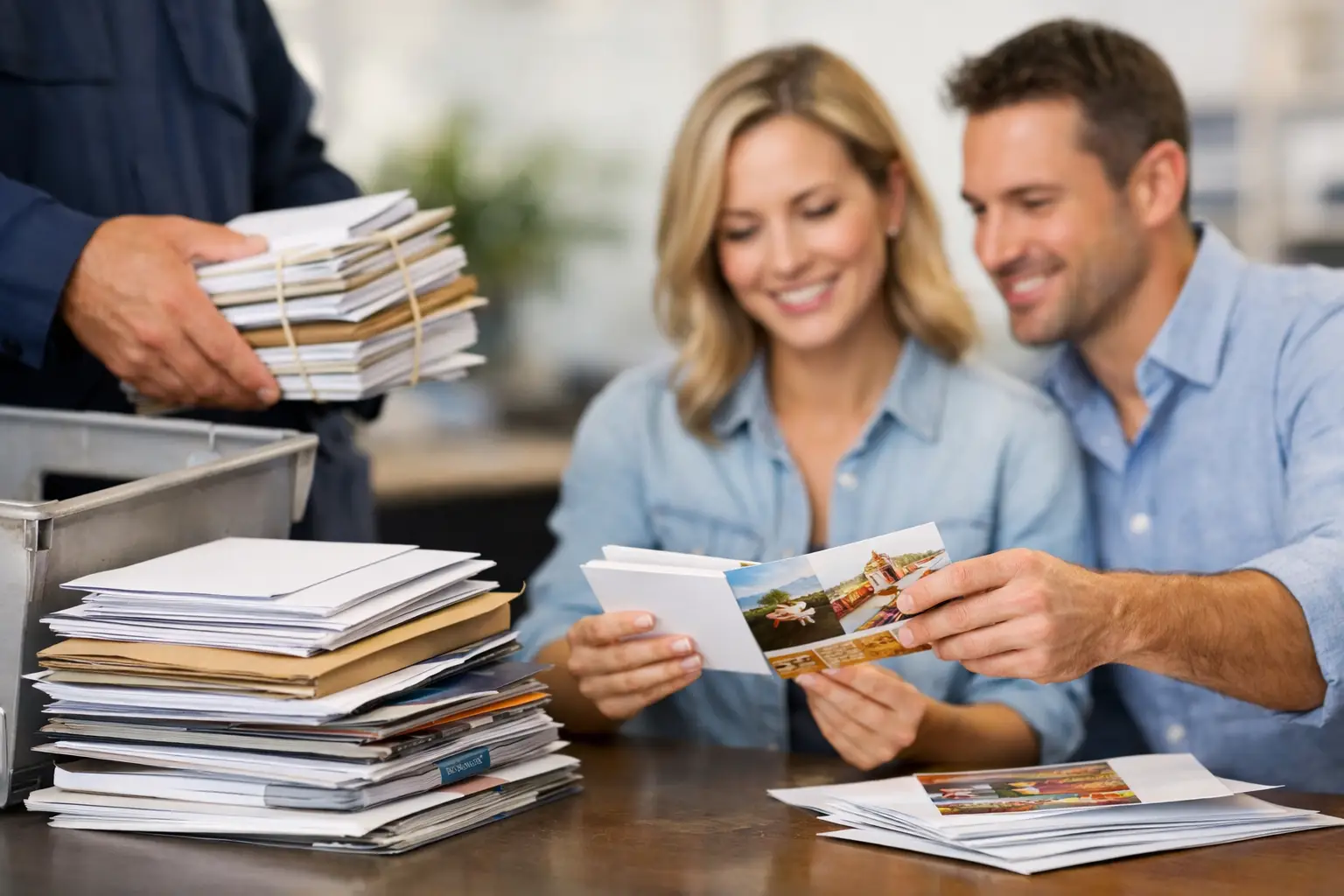
A well-designed postcard can put a new offer, opening announcement, or seasonal promotion directly in the hands of thousands of nearby prospects. But printing is only one part of the job. Bulk mail services bring together the list, design, print production, postal preparation, and distribution needed to turn a physical piece of marketing into a coordinated local campaign.
For businesses in Lancaster, Palmdale, and throughout Southern California, direct mail remains a practical way to reach households and customers without competing for a few seconds of attention on a crowded screen. The strongest campaigns are not simply sent in high volume. They are planned around a clear audience, a compelling offer, professional printing, and a reliable process for getting every piece into the mail stream.
What Bulk Mail Services Actually Handle
Bulk mail is often used as a catch-all term for sending a large quantity of postcards, letters, brochures, or promotional pieces at postal rates intended for business mailings. In practice, a successful campaign requires more than placing a stack of cards in the mail.
A full-service provider can coordinate the details that take time away from your staff: preparing the artwork for print, producing the pieces at the correct size and quality, helping identify a mailing audience, addressing or labeling each piece, sorting it to postal requirements, and delivering the completed mailing for distribution. Instead of managing a printer, a list provider, and a separate mail house, your business has one point of contact responsible for the project.
That matters when a promotion has a deadline. A restaurant opening, real estate listing campaign, club event, service special, or retail sale cannot wait while different vendors try to coordinate files, addresses, and delivery dates.
Start With the Audience, Not the Postcard
A postcard can look excellent and still produce weak results if it reaches the wrong homes. Before selecting paper stock, colors, or quantities, define the people most likely to respond. A local plumber may want to reach homeowners in specific neighborhoods. A realtor may focus on an area surrounding a new listing. A retail store may target households within a practical driving distance.
There are two common approaches. A targeted mailing list uses available geographic and demographic information to reach a defined type of recipient. This can be useful when your ideal customer has identifiable characteristics, such as a location, business category, or homeowner status. Every Door Direct Mail, often called EDDM, reaches all residential addresses on selected postal routes. It is often a good fit for neighborhood businesses, restaurants, salons, local events, and service providers that want broad nearby visibility.
Neither option is automatically better. Targeted lists can reduce waste when your offer is specific. Route-based mail can provide efficient local coverage when nearly every household in an area is a potential customer. The right choice depends on your service area, budget, offer, and customer profile.
Keep Your Offer Easy to Understand
Direct mail gives people something they can hold onto, but it still needs to earn attention quickly. The front of a postcard should communicate who you are and why the recipient should care. The back should make the next step simple.
A strong offer might be a limited-time discount, free estimate, grand-opening special, event date, seasonal service reminder, or introductory package. Avoid trying to explain every service you provide on one small card. Give the reader one clear reason to call, visit, scan, or bring the postcard in.
Include a direct call to action, current contact information, and a way to measure response. A unique offer code, dedicated phone number, event RSVP, or “bring in this card” promotion can show which campaigns are generating leads. This information makes the next mailing easier to improve.
Print Quality Is Part of Your Reputation
A mailed piece represents your business before a customer speaks with your team. Thin paper, dull color, hard-to-read type, or a crowded layout can make even a good offer feel less credible. On the other hand, a clean postcard with professional color and a readable message supports the impression that your business is organized and ready to serve.
Format should fit the campaign. Postcards are popular because they are immediately visible and easy to scan. Folded brochures give you more room for menus, service packages, product details, or event information. Letters can work well when the message requires a more personal explanation or when you are contacting current customers. Door hangers can be effective for very local service businesses when door-to-door distribution is appropriate.
Paper choice also affects the result. A heavier glossy stock can make colorful retail offers and food photography stand out. A more understated finish may better suit professional services or formal announcements. The best choice is not always the most expensive one. It is the one that matches your brand, message, and budget while holding up well during handling and delivery.
Why Postal Preparation Deserves Attention
Postal rules affect cost, timing, and whether a mailing can be processed efficiently. Size, weight, address placement, postage area, barcode requirements, bundle preparation, and mailing class all matter. Small production mistakes can create delays or require expensive corrections after the job is printed.
This is where experienced bulk mail services save businesses real time. A provider familiar with direct-mail execution can set up the piece with mailing requirements in mind before it goes to press. Address areas and indicia placement are planned correctly, lists are processed and prepared, and the finished mail is sorted for the proper postal entry process.
For a business owner or office manager, that means less time trying to interpret postal specifications and more time preparing staff, inventory, and follow-up for the response your campaign is designed to generate.
Plan Timing Around Your Customer’s Decision
Mail is not instant, which is why campaign timing should begin before the date of your sale, event, or promotion. Give the project enough time for design approval, printing, list preparation, postal processing, and delivery. If you are promoting a one-day event, the card needs to arrive early enough for recipients to make plans but not so early that they forget it.
Seasonal businesses should plan even farther ahead. HVAC companies can promote tune-ups before temperature changes. Tax professionals can mail before filing season gets busy. Landscapers can schedule spring and fall offers before customers begin searching for help. Repetition also matters. Many recipients need to see a business more than once before they respond, especially if they do not need the service immediately.
A practical schedule may include a first mailing to introduce the offer, a follow-up mailing to reinforce it, and a customer mailing for people who already know your business. Frequency should match your budget and the value of a new customer. High-value services often justify a more sustained campaign than a low-margin, one-time offer.
One Workflow Means Fewer Gaps
When printing and mailing are handled separately, the process can break down in ordinary ways. A design file may not meet postal layout requirements. The printed quantity may not match the final list count. An address file may need cleanup after the cards have already been produced. A deadline can become difficult because no one vendor owns the full schedule.
Working with one print-and-mail partner reduces those handoffs. At JR’S Handling, the goal is to make campaign coordination straightforward, from postcard printing and mailing-list support to postal preparation and distribution. With more than 34 years of direct-mail postcard marketing experience, the team can help businesses choose a practical format, produce a professional piece, and move it through the mailing process efficiently.
This approach is useful whether you need a single neighborhood campaign or recurring mail for changing offers. It also keeps your business materials consistent. Your postcards, brochures, business cards, invoices, envelopes, banners, and other printed pieces can present the same professional identity wherever customers encounter them.
Make the Most of Every Response
The mailing is the beginning of the customer conversation, not the end. Make sure the phone is answered, your staff understands the offer, and the landing page or in-store process is ready. If a customer calls for an estimate, respond promptly. If the card promotes an event, make registration or attendance easy. Good follow-up is what turns attention into appointments, sales, and repeat business.
Keep a record of the quantity mailed, neighborhoods or audience selected, offer used, cost, and results. Direct mail works best when businesses learn from each drop. You may find that one area responds better, one offer produces higher-value customers, or a different postcard size earns more attention. Those lessons help you spend future marketing dollars with greater confidence.
A professionally planned mailing gives local businesses a visible, tangible way to stay in front of the people they want to serve. When your next promotion needs quality printing and dependable distribution without the burden of coordinating multiple vendors, request a custom quote and give us a try today.