A restaurant with a grand-opening offer has seconds to get noticed. A real estate agent may need enough room to explain local market expertise. A home service company needs a format that feels credible before a prospect makes a call. That is why a mailer format comparison should start with the job the piece needs to do, not simply the cost per piece.
The right direct-mail format helps your message reach the right households with a clear reason to respond. The wrong one can bury a strong offer in too much copy, make an important service look generic, or add production cost without improving results. For businesses in Lancaster, Palmdale, and throughout Southern California, choosing the right format is one of the most practical ways to protect a marketing budget and improve local visibility.
Mailer Format Comparison: Match the Format to the Goal
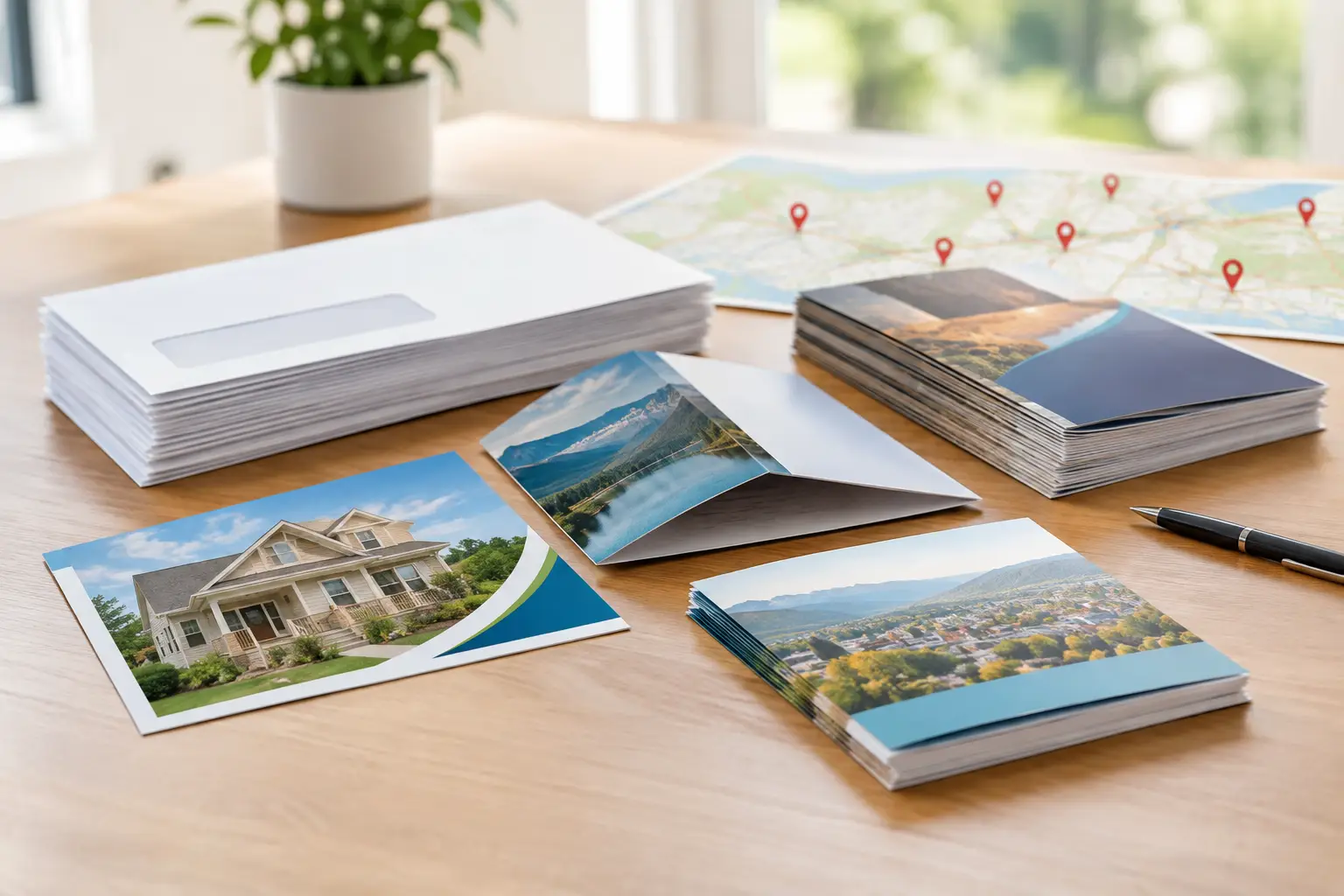
Postcards, letters, folded self-mailers, and brochure-style mailers can all produce results. Each has a different strength. The best choice depends on how much information your customer needs before acting, how personal the message should feel, the size of the audience, and whether you are making a one-time offer or building long-term awareness.
A simple promotional offer usually benefits from a format that is easy to scan. A higher-consideration service may need room for details, testimonials, photos, or a step-by-step explanation. Before selecting paper stock, size, or a mailing route, decide what one action you want the recipient to take: call, visit, schedule, bring in a coupon, attend an event, or remember your name.
Postcards: Fast Visibility for Offers and Local Awareness
Postcards are often the first choice for local direct mail because there is no envelope to open. The offer, headline, image, and call to action are immediately visible. This makes postcards especially effective for restaurants, salons, retail promotions, seasonal service reminders, real estate farming, grand openings, and event announcements.
A standard postcard is efficient when the message is focused. Use the front to earn attention with a clear headline, a strong image, or a specific offer. Use the back for the details: service area, phone number, website, deadline, coupon code, or map. Larger postcards provide more room and can stand out in the mail, but they also increase print and postage costs.
The trade-off is simple: postcards do not offer much privacy or space for a complex sales message. If your offer needs detailed pricing, personalized content, or several pages of explanation, a postcard may feel crowded. It performs best when the recipient can understand the value quickly.
Letter Mailers: Personal, Detailed, and Credible
A letter package uses an envelope and one or more enclosed pieces. It requires more production steps than a postcard, but it can create a more personal experience. Recipients must open the envelope to see the message, so the envelope design and return address need to look professional and relevant.
Letters are a good fit for financial services, medical offices, professional firms, membership organizations, business-to-business outreach, and higher-value home improvement projects. They allow you to explain a service, introduce the business owner, include a reply card, or add a brochure and offer sheet. Variable data can also make a letter feel more tailored to each recipient.
This format works when trust is part of the sale. A roofing contractor introducing financing options, for example, may need more explanation than a coupon postcard can hold. The additional space supports a stronger case, but it also requires careful writing and a clear response path. A long letter with no strong offer or next step will not outperform a well-designed postcard simply because it has more words.
Folded Self-Mailers: More Content Without an Envelope
Folded self-mailers are folded pieces that mail without an envelope. They can look like a compact brochure and provide more panels for photos, service descriptions, menus, schedules, or before-and-after examples. For businesses that need more than a postcard but want to avoid envelope costs, this is often a practical middle ground.
A folded format is useful for restaurants promoting a new menu, clubs advertising programs, retailers featuring several product categories, and service businesses that need to show multiple services. A landscaping company can use panels to show design, maintenance, irrigation, and seasonal cleanup. A fitness center can explain membership options and include a limited-time offer.
The key is organization. Each panel should guide the reader toward the next one rather than compete for attention. Put the most important offer and contact information where it can be found quickly. Fold placement, address panel requirements, paper weight, and sealing rules can affect mailability, so it pays to plan the piece with print and mailing requirements in mind from the beginning.
Brochure and Catalog Mailers: Best for Information-Rich Campaigns
Brochure-style mailers and small catalogs make sense when the recipient needs to compare options or see a range of products. They are common for product retailers, schools, event venues, travel-related businesses, and companies with multiple service lines. This format can support better photography, more detailed descriptions, price ranges, and customer proof.
The advantage is depth. The trade-off is cost and attention. More pages increase design, printing, and postage requirements, and recipients may not read every page. Keep the main message clear even if the piece contains substantial information. A cover should state why the recipient should open it, and every interior section should lead back to a call, visit, appointment, or order.
For many small and midsize businesses, a full catalog is not necessary. A well-planned tri-fold or multi-panel self-mailer can deliver enough information at a more controlled cost. The decision should be based on what the customer truly needs to know before responding.
Compare Cost Beyond the Printed Piece
The lowest print price is not always the lowest campaign cost. Mailer size, paper stock, folding, addressing, list quality, postage classification, and quantity all affect the final number. A smaller postcard may cost less to produce and mail, but a larger format could earn more attention for a major seasonal campaign. It depends on the offer, your audience, and the value of one new customer.
Mailing lists deserve the same attention as design. A polished mailer sent to the wrong homes will not produce the response you expect. Geographic targeting works well for businesses with a defined service area, while demographic or customer-based lists can help refine the audience further. Existing customers may respond better to a loyalty offer, while new prospects may need an introductory incentive.
Plan for tracking before the mail hits the post office. Use a unique offer code, a campaign-specific phone number, a dedicated landing page name, or a simple question for callers such as, “Did you receive our mailer?” Tracking does not need to be complicated. It gives you practical information for the next campaign: which neighborhood responded, which offer pulled best, and whether a larger or smaller format earned its cost.
Build a Mailer That Makes Response Easy
No format can overcome a vague message. Whether you choose a postcard or a letter package, lead with a customer benefit and make the next step obvious. “Call today for a free estimate,” “Bring this card in by Friday,” and “Schedule your appointment now” are clearer than a general statement about quality service.
Your design should also support the way people sort mail. Use readable type, a clean hierarchy, and enough open space around the offer. Include your business name, contact information, service area, and any deadline or restriction needed to make the offer understandable. Professional print quality matters because the mail piece represents your business before anyone speaks with your team.
JR’S Handling helps businesses coordinate print production, mailing lists, bulk-mail handling, and postal distribution in one process. That approach is especially valuable when you need help deciding whether a postcard, folded mailer, or letter package fits both your message and budget.
The most effective format is the one that gives a qualified local customer a clear reason to respond without making the message work harder than it should. Start with your offer, choose the amount of space it truly needs, and build the campaign around a defined audience. Give us a try today when you are ready to put a well-planned mailer in front of your next customers.