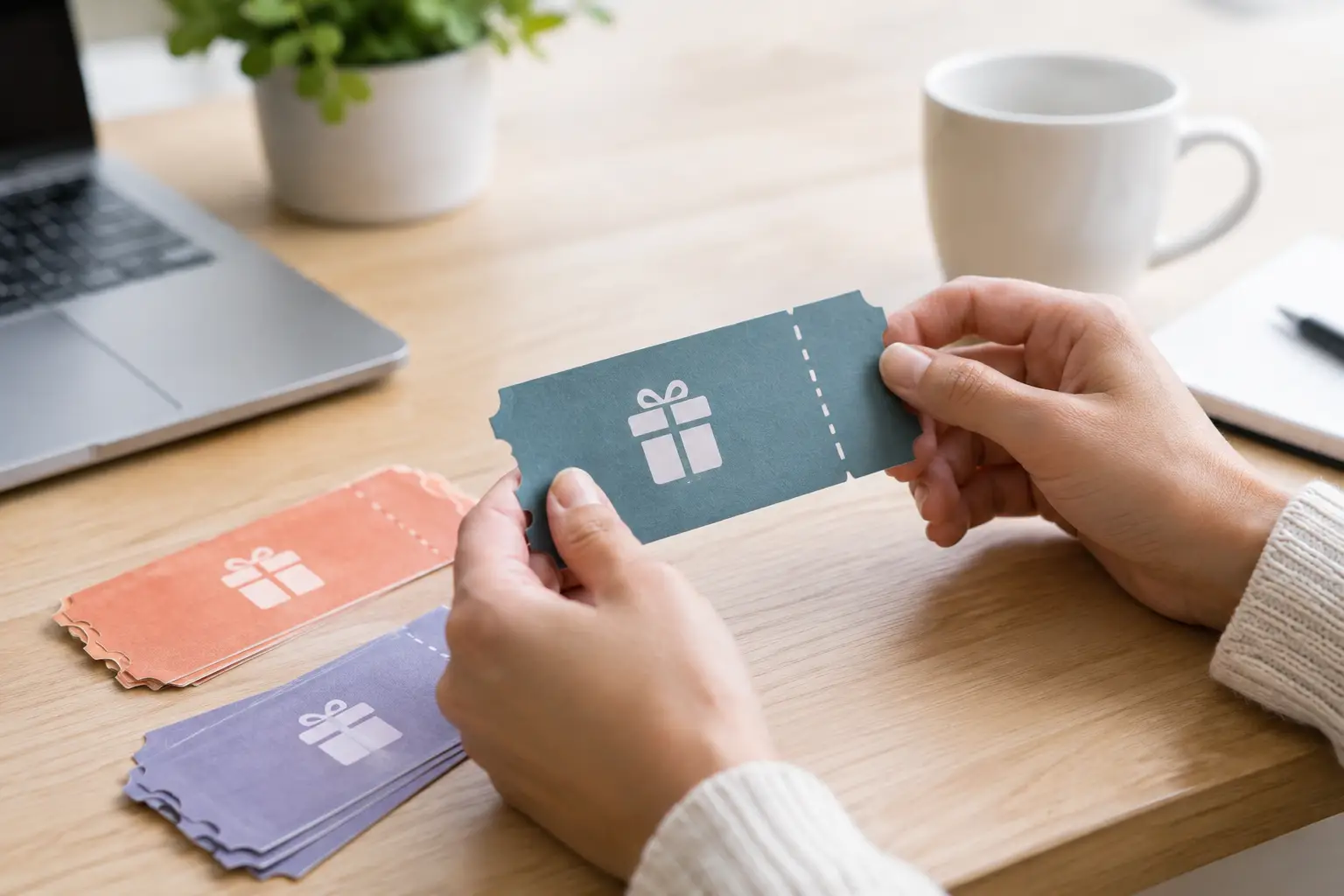
A coupon can put a new customer on your schedule, fill a slow weekday, or give a past customer a reason to call again. The difference is rarely the discount alone. Knowing how to design service coupons means making the offer easy to understand, easy to redeem, and worth keeping until the customer is ready to act.
For local businesses, a printed coupon has an advantage that online offers often miss: it stays visible. A postcard on the kitchen counter, a door hanger near the entryway, or a coupon tucked into an invoice can keep your business in front of the customer long after a social media post disappears. Good design turns that physical space into a clear invitation to contact you.
Start With One Service and One Clear Goal
Trying to promote every service on a single coupon usually weakens the offer. A plumbing company may want to advertise drain cleaning, water heater installation, leak detection, and maintenance plans. A salon may want to feature cuts, color, facials, and retail products. Those services can all be valuable, but a coupon should lead with one primary action.
Decide what you want the coupon to accomplish. Are you trying to bring in first-time customers, reactivate customers who have not visited in a while, increase average ticket value, or fill open appointments? Your goal determines the offer and the audience.
For example, a new customer campaign may work well with a straightforward percentage or dollar amount off an initial service. A home service provider with a higher-value job may be better served by a free estimate, seasonal inspection, or service upgrade. If your goal is repeat business, offer a return-visit incentive rather than giving away too much on the first transaction.
The best offer is specific. “Save money on service” is vague. “$25 off a first HVAC tune-up of $150 or more” tells customers exactly what they receive and establishes the purchase requirement. Specificity also reduces confusion for your staff when customers call or bring in the coupon.
Make the Offer Worth Notice
Customers should be able to understand the deal in a few seconds. Place the offer where it cannot be missed, using the largest and strongest type on the piece. The dollar amount, percentage, or featured benefit should be the visual center of the design.
This does not mean every coupon needs the deepest discount. Large discounts can attract attention, but they can also cut too far into the profit from labor, materials, travel, or technician time. Consider the value of a new customer over time. A reasonable introductory offer may be more profitable than a steep discount that brings in one-time bargain shoppers.
There are several offer types that work well for service businesses:
- A fixed dollar amount off a minimum purchase, such as $20 off a service of $100 or more.
- A percentage off a first appointment, especially when service prices vary.
- A complimentary add-on that has high perceived value but manageable cost.
- A seasonal service package, such as an inspection, cleaning, or maintenance special.
- A referral offer that rewards both the current customer and the new customer.
Choose an offer that customers can use without doing too much math. If conditions are necessary, keep them reasonable and state them plainly. A deal that feels complicated or heavily restricted can create doubt before the customer ever contacts you.
How to Design Service Coupons for Fast Reading
Most people will not study a coupon. They will scan it. Your layout should guide that scan from the offer to the service, then to the contact information and expiration date.
Start with a clear headline that connects the savings to the service. “Save $30 on Your First Carpet Cleaning” is more useful than “Special Offer.” Follow it with one or two short lines that explain who qualifies and what is included. If the offer applies to a certain geographic area, property type, or appointment window, say so clearly.
Use your company name and logo prominently, but do not let branding push the offer into a corner. The customer should recognize your business and immediately see why they should respond. Include a professional image only if it helps sell the service. Before-and-after photos, a clean service vehicle, a technician at work, or an image of the finished result can build trust. Generic stock images often add clutter without providing much information.
Color should support the message, not compete with it. High contrast between the main text and background makes the offer easier to read. Avoid placing important copy over a busy photo or using several competing colors. Your brand colors can create consistency, but readability should come first.
Leave breathing room around the offer, phone number, and call to action. Crowded designs can look less professional and make customers work too hard to find the details. A well-designed coupon does not need to fill every inch of the page.
Give Customers a Simple Next Step
A coupon does not produce results unless the customer knows what to do next. Tell them directly: call to schedule, visit your location, bring in the coupon, or mention the offer when booking. Use one primary call to action instead of asking people to call, text, email, visit several pages, and follow multiple accounts.
Your contact details should be easy to find and easy to read. Include your phone number, website if applicable, business address for walk-in locations, and operating hours when they influence the customer’s decision. For service businesses that travel to customers, identify the cities or neighborhoods you serve. Local relevance can make the offer feel more immediate.
A coupon code can help track results, particularly if you use different versions for direct mail, counter handouts, door hangers, or customer invoices. Keep the code simple, such as SPRING25 or MAIL30. Your staff should know how to enter or note the code consistently. Tracking is only useful when it is part of the everyday process.
Put the Fine Print to Work
Terms and conditions protect your business, but they should not overpower the design. Use readable type and plain language. Customers need to know whether the coupon is limited to new customers, whether a minimum purchase applies, whether it can be combined with other promotions, and when it expires.
An expiration date creates urgency, but it should match your service cycle. A two-week offer may create a quick response for a restaurant or retail event. Home improvement, auto repair, legal, and other considered services may need a longer window because customers often need time to plan. Seasonal promotions should arrive early enough for customers to schedule before the season is underway.
Avoid vague wording such as “restrictions may apply” unless you also explain the important restrictions. Clear terms prevent disagreements and help your team deliver a professional customer experience.
Match the Print Format to the Way You Will Deliver It
The format affects both design and response. A direct-mail postcard gives you room for a strong image, offer, mailing panel, and clear contact details. It is a practical choice when you want to reach homes or businesses in selected neighborhoods. A mailing list can be targeted by location and other useful characteristics, helping you spend your budget on the audience most likely to need your service.
A smaller coupon card can work well at the counter, inside customer bags, at community events, or as an invoice insert. Door hangers are useful when your service area is concentrated and you want a local, neighborhood-level presence. For a higher-value service, a letter package may provide enough space to explain the offer, establish credibility, and include a detachable coupon.
Paper stock and finish matter, too. A flimsy coupon can make a premium service feel less established. On the other hand, an oversized or heavily finished piece may not be necessary for every campaign. The right choice depends on your offer, budget, brand, and delivery method. A commercial printer can help you balance appearance, postage requirements, and production cost before the job goes to press.
Test, Track, and Improve the Next Drop
Do not judge a coupon campaign only by how many pieces were printed. Measure calls, appointments, redemptions, sales, and repeat customers. A campaign with fewer redemptions may still be the better performer if it generates larger jobs or more profitable clients.
When possible, change one major element at a time. Test a different offer, headline, service area, or postcard design, then compare results. If one neighborhood responds better than another, that information can guide the next mailing. If customers repeatedly ask about a condition that was printed on the coupon, the wording may need to be clearer.
Printed marketing works best when execution is handled with the same care you bring to your service. From the offer and design to print production and postal delivery, every detail affects whether the coupon gets noticed, understood, and redeemed.
A well-planned coupon gives local customers a practical reason to choose you now. When you are ready to put that offer in their hands, JR’S Handling can help you produce a professional piece and coordinate the mailing so you can stay focused on serving the new customers it brings in. Give us a try today.