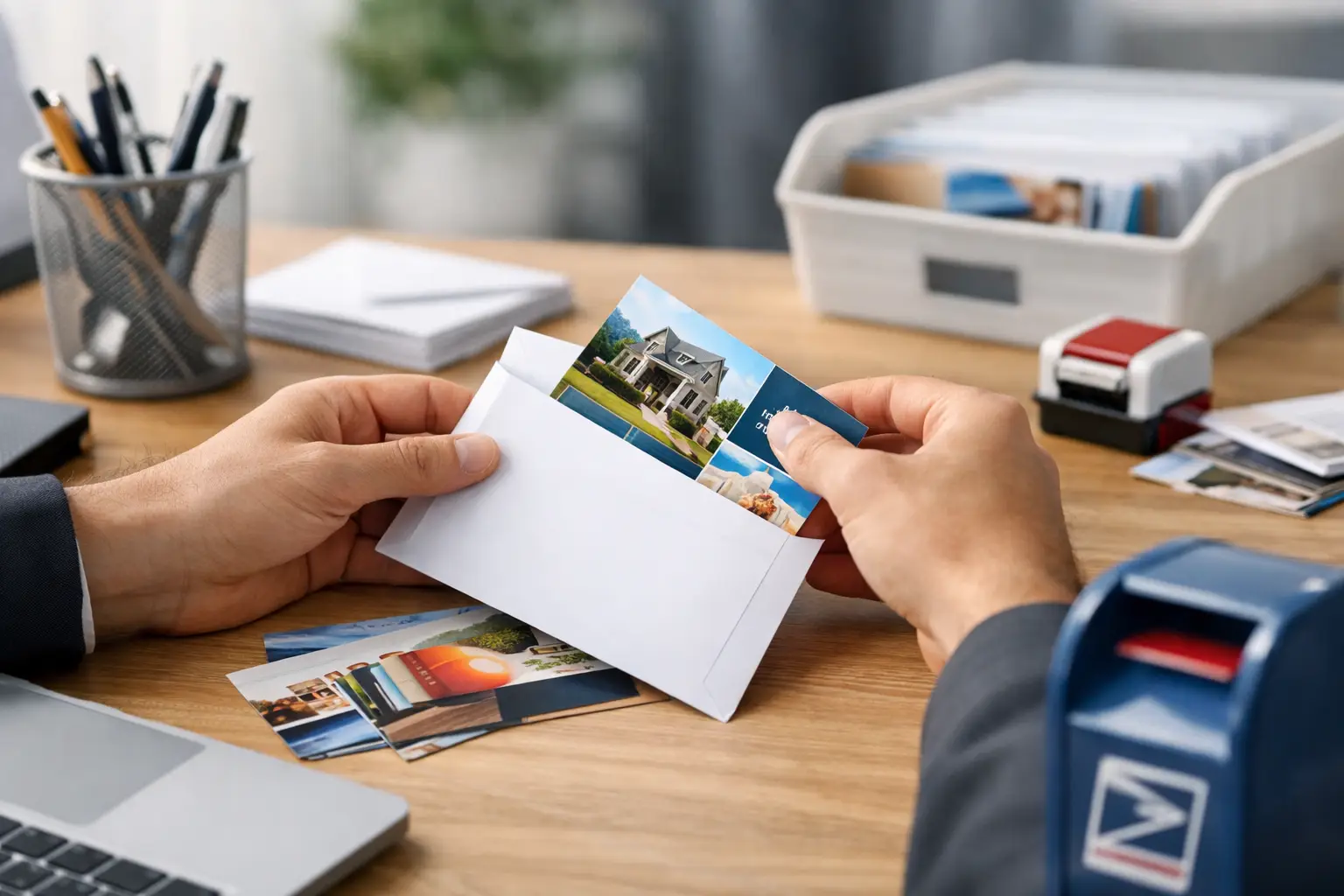
A postcard can put a new offer, event, listing, or service directly in the hands of people who live near your business. But knowing how to mail marketing postcards means more than printing a stack of cards and dropping them at the post office. The list, message, mail format, postage method, and timing all affect whether your campaign brings in calls, visits, and new customers.
For local businesses in Lancaster, Palmdale, and throughout Southern California, direct mail works best when it is planned as a complete campaign. A well-produced postcard with a clear offer gives people something physical to see, save, and act on. The goal is not simply to send mail. The goal is to reach the right households or businesses with a professional message that makes the next step easy.
Start With One Clear Campaign Goal
Before selecting a postcard size or mailing list, decide what you want the mailing to accomplish. A restaurant may want to fill tables during slower days. A real estate professional may want more listing appointments. A contractor may want estimates within a defined service area. An event promoter may need ticket sales before a deadline.
Choose one primary action for each card: call, visit, scan a QR code, redeem an offer, register, or request a quote. Trying to promote every service, every product, and every social channel usually weakens the message. A postcard has limited space, so the offer needs to be visible in seconds.
Use a specific reason to respond. Examples include a seasonal special, a first-time customer discount, a limited-time sale, an open house, a grand opening, or a free consultation. Include a clear deadline when appropriate. Urgency can improve response, but the offer still needs to be realistic and easy for your staff to honor.
Build a Mailing List That Matches Your Market
The mailing list often matters more than the postcard design. A polished postcard mailed to the wrong audience is still wasted marketing spend. Start with the people most likely to need what you sell.
For an established business, a customer list is often the best place to begin. Previous customers already know your name, and a mailed offer can encourage repeat purchases, referrals, or reactivation. Make sure your list is current, formatted correctly, and checked for duplicates or incomplete addresses.
If you are looking for new customers, a targeted prospect list can be built around location and relevant audience characteristics. A local home-service company, for example, may focus on neighborhoods within its service radius. A business-to-business provider may target companies by industry, size, or location. Retailers may focus on nearby households that fit the customer profile they want to reach.
Another option is Every Door Direct Mail, often called EDDM. This approach delivers postcards to every address on selected postal carrier routes rather than using individual names and addresses. It can be a practical choice for restaurants, gyms, stores, local events, and service businesses that want broad neighborhood visibility. It is less precise than a targeted list, but it can be efficient when geographic coverage is the priority.
A print-and-mail provider can help determine which route makes more sense for your budget and goal. The right choice depends on whether you need targeted precision, broad local reach, or a mix of both.
Design a Postcard People Can Read Quickly
Marketing postcards compete with everything else in a mailbox. Your card needs to communicate its value immediately. Use the front to lead with the strongest visual, headline, or offer. The back should include the mailing panel, contact information, and supporting details without becoming crowded.
Keep the headline short and customer-focused. “Save on Your First Service Visit” is easier to understand than a long paragraph about your company history. Pair it with one high-quality image or a clean product photo when it supports the offer. Low-resolution artwork, cluttered layouts, and too many fonts can make an otherwise good promotion look less professional.
Your logo, phone number, website, address, and call to action should be easy to find. If you use a QR code, test it before printing and include another way to respond. Some customers will scan it, while others will call or visit directly.
Leave sufficient room for the postal address, barcode area, and postage or permit marking. Postal layout requirements are not a detail to handle at the end. Planning the mail panel correctly before production helps avoid costly revisions and delays.
Select the Right Postcard Size and Stock
A standard postcard is economical and familiar, but a larger format can earn more attention. The right size depends on your offer, your mailing method, and your budget. A coupon-heavy retail promotion may need more room than a simple reminder card, while an oversized postcard can make sense when visibility is the main goal.
Paper stock also affects how your business is perceived. A sturdy, glossy stock can make images and color stand out. A matte finish may be better for a more understated look or for cards that need to be written on. Ask for recommendations based on the design, mailing plan, and desired price point instead of choosing stock based on appearance alone.
Prepare for Printing and Postal Requirements
Before the job goes to print, review the final proof carefully. Confirm every phone number, address, offer date, promo code, and service area. Have more than one person check the proof if possible. A missed digit can cost more than a reprint because it can also send responses to the wrong place or make an offer impossible to redeem.
Your artwork should be supplied at print-ready quality, including the proper bleed and safe margins. Colors displayed on a screen do not always reproduce exactly the same way in print, especially when brand colors are important. A professional printer can review files, recommend adjustments, and help protect the quality of the finished piece.
Mail pieces must meet USPS requirements for size, weight, addressing, and automation standards. These requirements affect postage and may affect the type of postcard you can send. Addressing, sorting, bundling, postal paperwork, and delivery entry can take time, particularly for larger campaigns. Working with an experienced direct-mail team keeps these operational steps from becoming a last-minute problem.
Choose a Postage Method That Fits the Campaign
Postage is a major part of your direct-mail budget, so it should be considered early. First-Class Mail can be useful for time-sensitive notices, personal communications, and campaigns where faster delivery is valuable. Marketing Mail is commonly used for promotional postcards when delivery speed is less urgent and cost control is a priority.
For broad neighborhood mailings, EDDM may offer a straightforward way to reach local addresses by carrier route. It is not automatically the best option for every campaign. If your offer is best suited to a narrow customer profile, a purchased or customer mailing list may produce a better return even if the per-piece cost is higher.
Ask for a complete estimate that includes printing, list preparation if needed, addressing, postage, postal processing, and delivery handling. Comparing only the printing price can leave out costs that are essential to getting the cards into mailboxes.
Time Your Postcards Around Customer Behavior
A postcard that arrives at the wrong time can lose much of its value. Plan backward from the date your offer, event, or promotion begins. Allow time for design approval, printing, mailing preparation, postal processing, and delivery. Avoid assuming that a campaign will reach every mailbox on the same day.
Seasonal businesses should mail before demand peaks. Home-service companies can promote maintenance before extreme weather arrives. Retailers can schedule offers ahead of holiday shopping periods. Event organizers should give recipients enough time to make plans, while still sending close enough to the event that the message remains top of mind.
Repetition also matters. One mailing can create awareness, but a sequence often performs better. A prospect may need to see your name several times before responding. If budget allows, consider mailing the same targeted area more than once with a consistent message or a follow-up offer.
Track Responses and Improve the Next Mailing
Every campaign should have a way to measure results. Use a unique promo code, dedicated phone number, landing page, QR code, or offer phrase that staff can ask about. Track inquiries, appointments, sales, and average order value, not just the number of cards mailed.
A response rate alone does not tell the full story. A smaller mailing to highly qualified prospects may produce fewer total responses than a broad route mailing, yet generate more profitable customers. Review the cost per lead, cost per sale, and revenue produced by the campaign.
Keep notes on the list used, postcard format, offer, mail date, and results. Over time, those records help you make smarter decisions about where to mail, what to say, and how often to send. Direct mail becomes more efficient when each campaign builds on what the previous one taught you.
A dependable print-and-mail partner can manage the production, list support, addressing, postal preparation, and distribution in one coordinated process. With more than 34 years of direct-mail postcard experience, JR’S Handling helps businesses spend less time managing moving parts and more time serving the customers their postcards bring in. Give us a try today when you are ready to put a professional local mailing to work for your business.