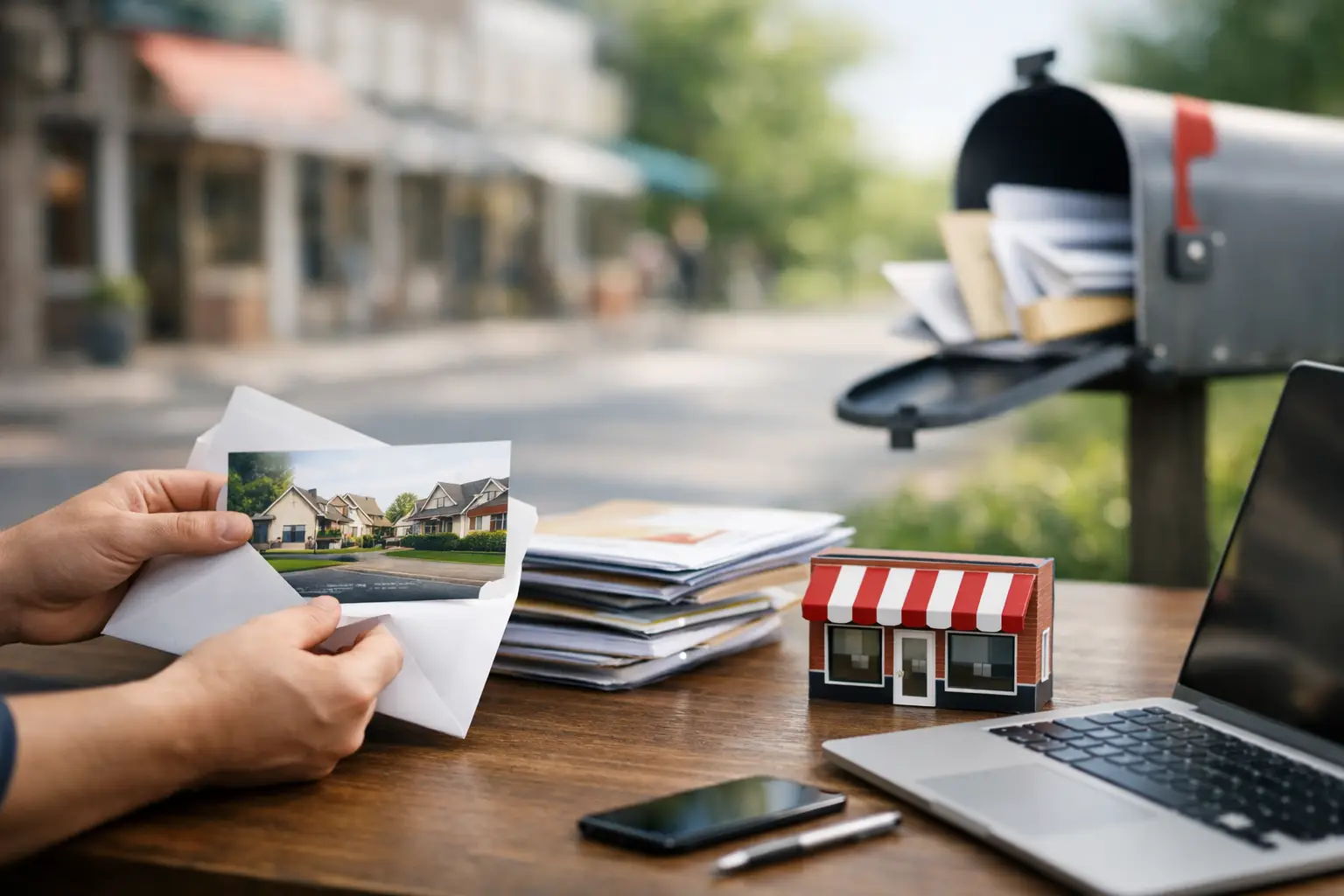
A local homeowner pulls a postcard from the mailbox, sees a clear offer for a service they have been meaning to schedule, and puts it on the kitchen counter. That moment is why the question, “does direct mail marketing work,” still matters to businesses competing for attention in Lancaster, Palmdale, and across Southern California. A well-planned mail piece puts your message in a real customer’s hands, not in a crowded feed that disappears with one swipe.
Direct mail is not a guaranteed sale simply because it is printed and mailed. It works when the audience, offer, design, timing, and mailing process support one another. For local businesses that need visible advertising and a practical way to reach nearby customers, it can be one of the most dependable ways to generate awareness, calls, visits, and repeat business.
Does Direct Mail Marketing Work? It Depends on the Campaign
Direct mail works best when it gives recipients a clear reason to act. A postcard announcing “We’re here” may build awareness, but a postcard offering a seasonal service special, a grand-opening incentive, or an event date gives people a reason to respond now.
The strongest campaigns begin with a specific business goal. A restaurant may want to bring in first-time diners during a slow week. A real-estate professional may want more listing leads in a defined neighborhood. A home-service company may want appointments before a seasonal rush. Each goal calls for a different offer, mailing area, and call to action.
This is where direct mail has an advantage over broad advertising. You can focus your budget on households, neighborhoods, customer lists, or business addresses that make sense for your offer. A local retailer does not need to reach every person in California. Reaching the right homes within a practical drive of the store can be much more valuable.
Results also depend on expectations. Some recipients will respond immediately, while others may save the card, remember your name later, or recognize your business when they are ready to buy. Direct mail often supports both immediate response and long-term local visibility. A single campaign can produce leads, but consistent campaigns help make your business familiar before the customer needs you.
Why Physical Mail Still Gets Attention
A professionally printed postcard is tangible. It can be held, displayed, handed to a family member, or placed where it will be seen again. That physical presence matters for offers that are local, visual, or time-sensitive.
Mail also reaches people in a different setting than digital advertising. Instead of competing with videos, messages, and notifications on a screen, your offer arrives at the home or office. That does not mean every mail piece will be read closely. It means a clean design, a visible headline, and a relevant offer have a real chance to make an impression.
For many local businesses, direct mail is especially effective because the buying decision is tied to location. Customers look for nearby contractors, restaurants, salons, gyms, insurance agents, real-estate professionals, retailers, and event options. A postcard that clearly identifies your location, service area, phone number, and offer can make the next step easy.
Print quality matters here. Blurry images, crowded copy, flimsy paper, and inconsistent colors can make an established business look less professional. On the other hand, a polished card tells recipients that your business pays attention to details. Your mailer represents your company before anyone picks up the phone.
The Elements of a Direct Mail Campaign That Performs
A direct mail piece should not try to say everything about your company. It should communicate one main message quickly. The front of the postcard needs a strong visual or headline that answers the recipient’s first question: why should I care?
The back should make action simple. Include your offer, basic service information, contact details, location if relevant, and an easy next step. A limited-time discount, free estimate, new-customer offer, event invitation, or redeemable coupon can all work well when they fit your margins and business goals.
Your list is equally important. Mailing an excellent postcard to the wrong audience wastes money. Mailing-list support can help businesses target by geography, household characteristics, business type, or other useful criteria. Existing customer lists can also be valuable for reactivation campaigns, loyalty offers, referrals, and reminders.
Timing deserves attention as well. An air-conditioning business may mail before warm weather arrives. A tax professional may mail before filing season. Clubs and event promoters need to give people enough notice to make plans. For ongoing local visibility, repeat mailings to the same area can be more effective than spending the entire budget on one oversized drop.
Finally, make the response measurable. Use a dedicated offer code, ask callers how they heard about you, include a campaign-specific phone extension, or track coupon redemptions. Measurement does not have to be complicated. It simply needs to help you see which neighborhoods, offers, and formats are bringing in business.
Common Reasons Direct Mail Falls Short
When business owners say direct mail did not work, the issue is often campaign setup rather than the channel itself. A generic message sent to an unfocused list will rarely create strong results. So will an offer that is too weak, too confusing, or difficult to redeem.
Another common problem is trying to save money in the wrong place. A cheap-looking design or poor-quality print can reduce trust before the recipient reads the message. Printing fewer pieces for a carefully selected audience is often a better use of budget than sending a weak mailer to a much larger area.
Businesses can also stop too soon. If customers need time to recognize your name or consider a purchase, one mailing may not tell the full story. This is particularly true for higher-value services, professional services, and purchases people make only occasionally. A planned sequence can keep your business top of mind without overwhelming the same audience.
Direct mail is also not the right answer for every situation. If you need responses within hours, or your service area is extremely broad with no local focus, another marketing method may be a better primary choice. But when you need to reach a defined community with a tangible message, direct mail is a practical tool worth considering.
A Better Way to Plan Your Next Postcard Mailing
Start by deciding what success looks like. Is your priority more calls, store traffic, quote requests, event attendance, or repeat orders? Once the goal is clear, build an offer that makes financial sense and select the audience most likely to respond.
Then choose a format that fits the message. Postcards are excellent for clear offers, announcements, coupons, and local promotions because recipients see the message immediately. Brochures and letters may be better when a service requires more explanation. Door hangers can be useful for very local neighborhood outreach. The right piece depends on how much information the customer needs before taking action.
Give the design room to work. Use readable type, high-quality images, your logo, consistent brand colors, and enough open space that the main offer stands out. Avoid cramming every service, product, and credential into a single card. If you provide many services, lead with the one most likely to start the conversation.
A reliable print-and-mail partner can simplify the process by coordinating the printing, mailing list, bulk-mail preparation, and postal distribution in one workflow. With more than 34 years of direct-mail postcard marketing experience, JR’S Handling helps local businesses move from an idea to a finished campaign without having to manage separate vendors for every step.
Direct Mail Works Best When It Feels Relevant
The most effective postcard is not necessarily the flashiest one. It is the one that arrives in the right place with a message the recipient understands immediately. A neighborhood offer from a nearby business can feel useful rather than intrusive when it solves a likely need, presents a fair incentive, and makes it easy to respond.
That is the opportunity behind direct mail: put a professional, targeted message where local customers can actually see it. Give us a try today with a campaign built around your audience, your offer, and the next step you want customers to take.