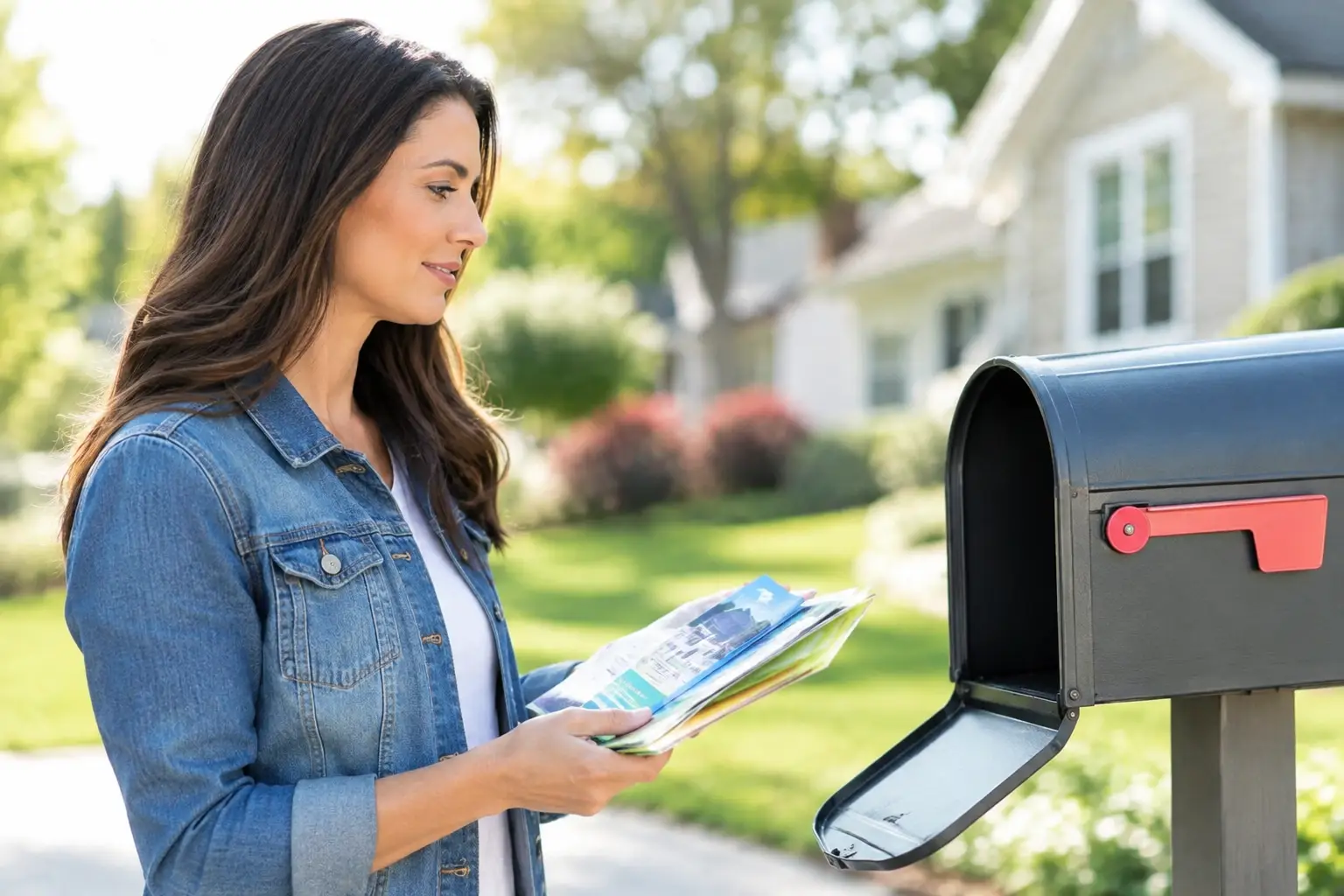
A postcard sent to every address in town may create visibility, but it can also spend your budget on households unlikely to need what you offer. Knowing how to target neighborhood mailers helps your business put a professional message in the hands of people most likely to respond, visit, call, or remember your name when they need your service.
For Lancaster, Palmdale, and surrounding Southern California businesses, neighborhood mailers work best when they are planned around real customer patterns. The right route, a clear offer, quality printing, and dependable mailing execution can turn a simple postcard into a practical customer-acquisition tool.
Start With the Customers You Want More Of
Before choosing a neighborhood, define the type of customer that makes a good fit for your business. A local restaurant may want nearby households within a short drive. A roofing contractor may benefit from established neighborhoods with older homes. A real estate professional may focus on homeowners in a specific ZIP Code, while an event promoter may need households close to the venue.
This first step keeps a mailing campaign from becoming too broad. Think about where your current customers live, how far they are willing to travel, what they tend to need, and what makes them choose a local provider. If most of your best clients come from a few communities, that is useful direction for your next mailing.
Your customer profile does not need to be complicated. A few practical details can make a significant difference: homeowner or renter status, household income range, age range, business type, property characteristics, or proximity to your location. The goal is not to exclude everyone else. It is to concentrate more of your budget where your message has a stronger chance of being relevant.
How to Target Neighborhood Mailers by Location
Geography is often the most effective starting point for local direct mail. You can target by city, ZIP Code, carrier route, neighborhood, or a defined radius around your business, job site, event location, or store. Each option has a different purpose.
A radius-based mailing makes sense for businesses that rely on convenience. A gym, salon, restaurant, dental office, or retail shop may see better results by reaching homes within a few miles rather than mailing across the entire Antelope Valley. People are more likely to try a business that feels close and easy to visit.
Carrier-route mailing is a strong choice when you want broad coverage in selected neighborhoods. It allows a business to reach every residential delivery point on chosen routes, which can be efficient for local offers, grand openings, seasonal services, and brand awareness. This approach works particularly well when your service has wide appeal, such as landscaping, home improvement, pest control, insurance, or community events.
For more selective campaigns, mailing lists can be built around household and property data. A pool service provider, for example, may want homes with pools. A financial professional may target households within particular age or income ranges. A business-to-business campaign may focus on offices, storefronts, or specific industry categories instead of residences.
The best method depends on your goal. If you are opening a new location, coverage around that location may matter most. If you sell a specialized service, more detailed audience filtering may justify a narrower mailing list.
Match the Route to the Offer
A neighborhood is not just a collection of addresses. It is a group of people with different needs, schedules, and buying habits. Your offer should make sense for the audience you select.
A family-focused neighborhood may respond well to a restaurant meal deal, youth program enrollment, tutoring offer, or home-service discount. Areas with newer homes may be a fit for window coverings, solar consultations, landscaping, fencing, or security services. Established neighborhoods can be productive for remodeling, roof inspections, plumbing, HVAC maintenance, and real estate services.
Avoid sending the same generic message to every route when your campaign can support a small amount of customization. Even changing the headline, image, or offer based on the area can make the piece feel more relevant. A postcard that says “Serving homeowners near East Lancaster” carries more local credibility than a message that could have been sent anywhere.
Your offer should be easy to understand in a few seconds. Use a defined reason to respond, such as a first-visit discount, free estimate, limited-time promotion, grand-opening special, seasonal checkup, or event RSVP. The offer needs to be realistic for your business to fulfill. An aggressive discount may generate calls, but it is not worthwhile if it attracts customers who will never become profitable repeat clients.
Use a Mail Piece That Looks Worth Keeping
Targeting gets your mailer to the right homes. Design determines whether it gets noticed. A professional postcard needs a clear hierarchy: your main message, the benefit to the customer, your offer, and a simple way to contact you.
Do not try to fit every service you provide onto one card. A crowded postcard can make even a strong business look unfocused. Lead with the service or promotion that matters most for this campaign, then provide only enough supporting information to build trust. Your business name, phone number, website or other contact method, service area, and a clear call to action should be easy to find.
Print quality also affects response. Sharp images, accurate color, readable type, and durable stock communicate that your business is established and dependable. This matters for every type of local company, from a contractor leaving estimates with homeowners to a club promoting a special event.
Postcard size is a trade-off between visibility and cost. A larger format has more room for an image and offer, and it can stand out in the mailbox. A standard-sized postcard may be more economical for frequent campaigns or large route coverage. The right choice depends on your budget, message, and mailing volume.
Plan Timing Around Customer Need
A well-targeted neighborhood mailing can still underperform if it arrives at the wrong time. Seasonal businesses should mail ahead of demand, not after customers have already made a decision. HVAC companies can promote maintenance before extreme temperatures. Tax professionals should begin outreach before filing deadlines become urgent. Event promotions need enough lead time for people to make plans.
Frequency matters too. One mailing can produce results, especially with a compelling offer, but repeated visibility usually builds stronger recognition. A homeowner may not need a painter or plumber the week your postcard arrives. If your company appears professionally in the mailbox several times over a few months, you are more likely to be remembered when the need comes up.
A practical approach is to mail a selected neighborhood more than once with a consistent look and a refreshed reason to respond. This does not mean sending the identical card every month. Keep your brand recognizable while rotating services, seasonal benefits, testimonials, or offers.
Track What Each Neighborhood Produces
Direct mail becomes easier to improve when you can measure it. Give each campaign a way to identify responses. You might use a unique phone extension, a specific offer code, a dedicated landing page, or a simple question for your staff: “How did you hear about us?”
Keep records of the neighborhoods mailed, quantity sent, date dropped, offer used, calls received, appointments booked, sales closed, and revenue earned. You do not need a complicated system. A basic spreadsheet can show which routes and offers are bringing in business.
Look beyond the first week. Some customers keep a postcard on the refrigerator or set it aside until they need the service. For higher-value purchases, the response period may be longer. Also consider customer lifetime value. A route that produces fewer initial calls may still be a better investment if it brings in loyal customers, recurring service accounts, or referrals.
Make Print and Mailing One Coordinated Job
Neighborhood targeting involves more than selecting addresses. Your list, postal preparation, design, print production, and delivery schedule all need to work together. Managing those pieces through separate vendors can create delays, list errors, inconsistent quality, and extra coordination for your team.
JR’S Handling helps local businesses coordinate commercial printing and direct-mail execution in one process, from mailing-list support and postcard production to bulk-mail handling and postal distribution. With more than 34 years of direct-mail postcard marketing experience, the focus is on producing a polished piece and getting it to the defined audience efficiently.
The strongest neighborhood mailer is not necessarily the one sent to the most homes. It is the one that reaches a sensible local audience with a relevant offer, arrives when that offer matters, and gives people a clear reason to contact you. Start with one well-chosen area, track the response, and let the results guide the next campaign. Give us a try today.