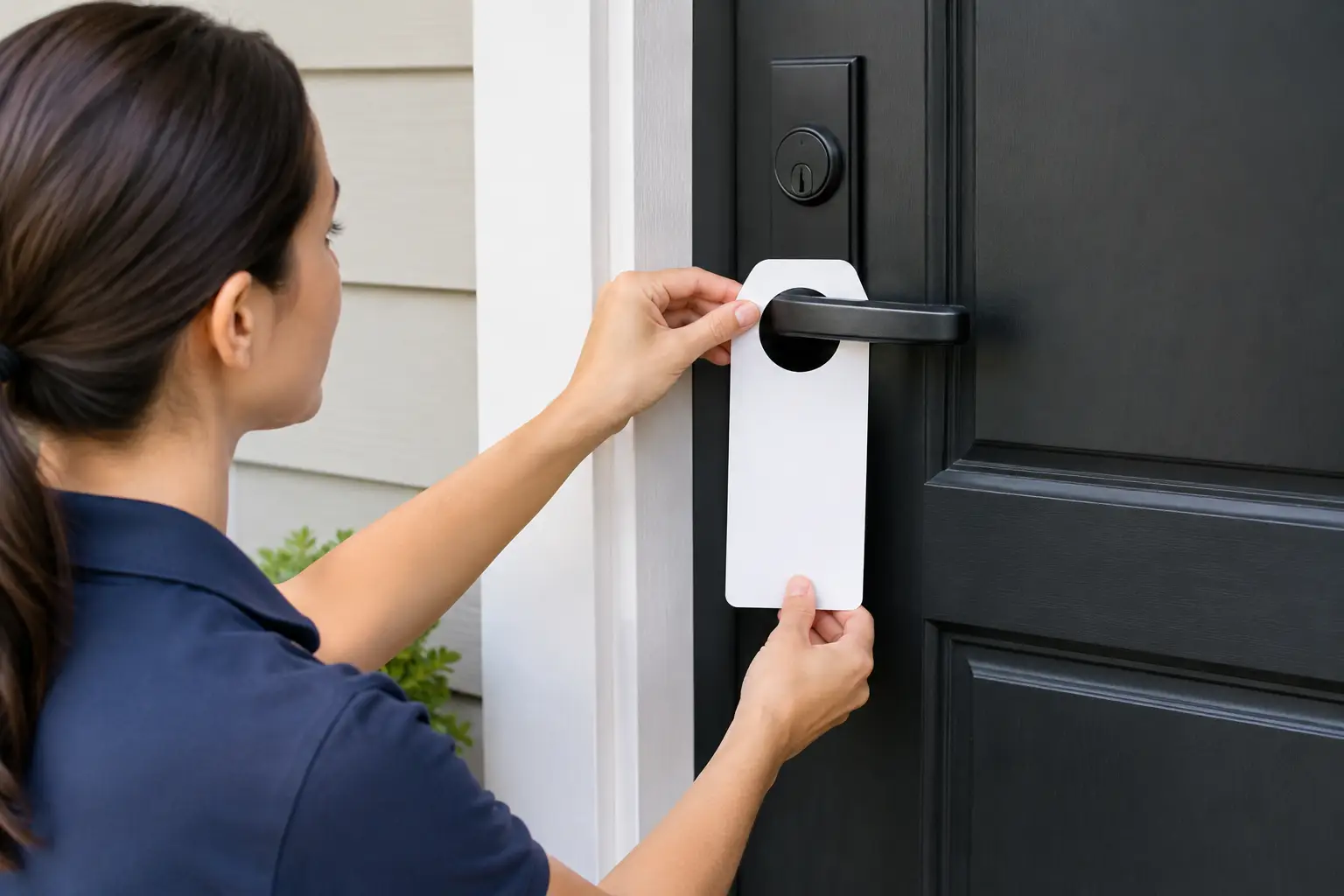
A door hanger has only a few seconds to earn attention. It is placed directly at a home or business, but that visibility only helps when the offer is clear, the neighborhood is well chosen, and the distribution is handled respectfully. Learning how to distribute door hangers is less about covering the most doors possible and more about putting a professional message in front of the people most likely to respond.
Start With the Right Neighborhoods
A local campaign works best when the service area, offer, and audience match. A landscaping company may focus on established neighborhoods with yards. A restaurant opening in Lancaster or Palmdale may target homes within a short drive of its location. A real estate professional may select neighborhoods where homes have recently sold or where they have an active buyer pool.
Avoid treating every door as equal. A broad distribution may create awareness, but it can also waste print and labor when many recipients are outside your service radius or are unlikely to need what you offer. Begin with a map of the areas you can serve profitably, then narrow it by property type, household profile, and proximity.
For many local businesses, a focused first drop produces better information than a citywide campaign. Choose two or three comparable neighborhoods, use the same offer in each, and measure which area generates calls, scans, visits, or redemptions. You can expand with more confidence after seeing where the response comes from.
How to Distribute Door Hangers Legally and Respectfully
Door hanger distribution has practical rules that should be addressed before a team begins walking routes. Local city ordinances, homeowner association policies, apartment management rules, and posted signs can limit solicitation or promotional materials. Check the rules for each target area and obtain permission where it is required.
Do not place door hangers in mailboxes. Mailboxes are reserved for USPS mail, and using them for unmailed advertising can create a federal compliance issue. Do not force materials through a door, place them under windshield wipers, or leave them where they can blow into landscaping or gutters. The proper placement is on the exterior door handle or another approved hanger location.
Respect “No Soliciting” signs. Even if the person distributing materials is not making a sales pitch, honoring the resident’s preference protects your company’s reputation. Skip gated communities unless you have authorization. For multifamily properties, speak with the property manager first. Some communities may permit door delivery, while others require materials to be placed in a designated area or prohibit them entirely.
Professional conduct matters as much as the design. Distributors should stay on visible paths, avoid looking into homes, keep noise low, and leave the property immediately after placing the approved material. A well-run campaign should make your business look organized, not intrusive.
Build a Door Hanger That Gets a Response
The front of the door hanger needs one job: make the recipient want to read the rest. Lead with a specific offer, a timely reason to act, or a clear local benefit. “10% Off Your First Pest Control Service” is stronger than a general statement about quality service. “Grand Opening Special Through Saturday” gives people a reason to respond now.
Keep the message easy to understand at arm’s length. Use a headline, a short supporting message, a visible call to action, and more than one contact option. A phone number is essential for many service businesses, while a QR code can direct recipients to a landing page, menu, estimate request, or appointment form.
The back of the hanger can carry supporting details such as service areas, business hours, testimonials, a menu of services, or offer terms. Do not overcrowd either side. Small type and long paragraphs reduce the value of a format that should communicate quickly.
Print quality also affects trust. Thin stock, dull color, poor trimming, or an awkward door cut can make even a good business look unprepared. A durable, professionally printed hanger holds up better in outdoor conditions and gives prospects a better first impression of your company.
Plan Routes Before Anyone Starts Walking
Distribution becomes expensive when crews spend the day deciding where to go next. Organize routes in advance by neighborhood, street, and estimated number of doors. Give each distributor a defined territory and enough materials for that route, with a small overage for counting differences.
A simple route sheet should identify the starting point, the streets to cover, any properties to skip, and the expected door count. If you are using several distributors, divide territory at natural boundaries such as major roads, entrances, or neighborhood sections. This reduces overlap and helps prevent missed streets.
Timing depends on your audience and offer. Residential routes are often best completed during daylight hours when distributors can work safely and residents can see the hanger soon after it is placed. For restaurants, event promotions, and retail offers, distribute close enough to the promotion date that the message remains timely. For home services, a seasonal campaign may perform best just before demand rises, such as air conditioning service before sustained summer heat.
Weather deserves consideration in the Antelope Valley. Wind can dislodge poorly designed or improperly placed materials, while rain can damage low-quality paper. Use an appropriate stock and schedule deliveries around conditions when possible. A campaign that stays in place long enough to be seen has a better chance of producing a response.
Train Distributors and Verify Coverage
Whether you use employees, a promotional team, or a distribution partner, give clear instructions before the campaign starts. Explain placement rules, streets to cover, properties to avoid, and what to do if they encounter a gate, posted restriction, or safety concern.
A reliable process includes accountability. Ask distributors to record the number of materials delivered, report skipped areas, and return unused door hangers. Supervisors can spot-check routes after delivery, especially on the first campaign or when a new team is involved. The goal is not to create unnecessary paperwork. It is to confirm that the locations you paid to reach were actually reached.
For larger campaigns, break distribution into manageable daily sections instead of releasing all materials at once. This makes it easier to correct route problems, replace a missed section, or adjust the schedule if weather or access issues arise.
Track Results So the Next Drop Performs Better
Door hangers are tangible, but their results can still be measured. Include a unique offer code, dedicated phone number, QR code, or campaign-specific web address. Train whoever answers the phone to ask new callers how they heard about your business.
Track response by neighborhood when possible. You may find that one area produces more appointments even though another has a higher number of doors. That difference can come from household needs, home values, distance from your business, or how well the offer fits the area.
Do not judge performance only by immediate sales. A door hanger may also create name recognition that supports later searches, referrals, or walk-in traffic. Still, a direct offer gives the campaign a measurable purpose and helps you compare the cost per lead or cost per customer against other local advertising options.
Coordinate Printing and Distribution From the Beginning
The distribution plan should influence the print order. Your route count determines quantity, while your delivery timeline affects production scheduling. Ordering too few pieces can leave a route incomplete. Ordering far too many can tie up budget in materials that no longer match a time-sensitive offer.
Before printing, confirm the offer expiration date, contact information, QR code destination, service area, and required licensing or promotional disclosures. Review a proof carefully. A typo in a phone number or an incorrect deadline can turn an otherwise effective neighborhood campaign into wasted expense.
Working with an experienced print partner can simplify these details, particularly when your business needs professional design, dependable production, and help coordinating a targeted local campaign. JR’S Handling helps businesses put printed marketing materials together with practical distribution planning, so outreach is easier to manage from the first proof to the final route.
A door hanger campaign earns its value when it puts a useful offer in the right hands and gives people a simple reason to contact you. Start with a focused area, deliver with care, and let the response guide your next move.