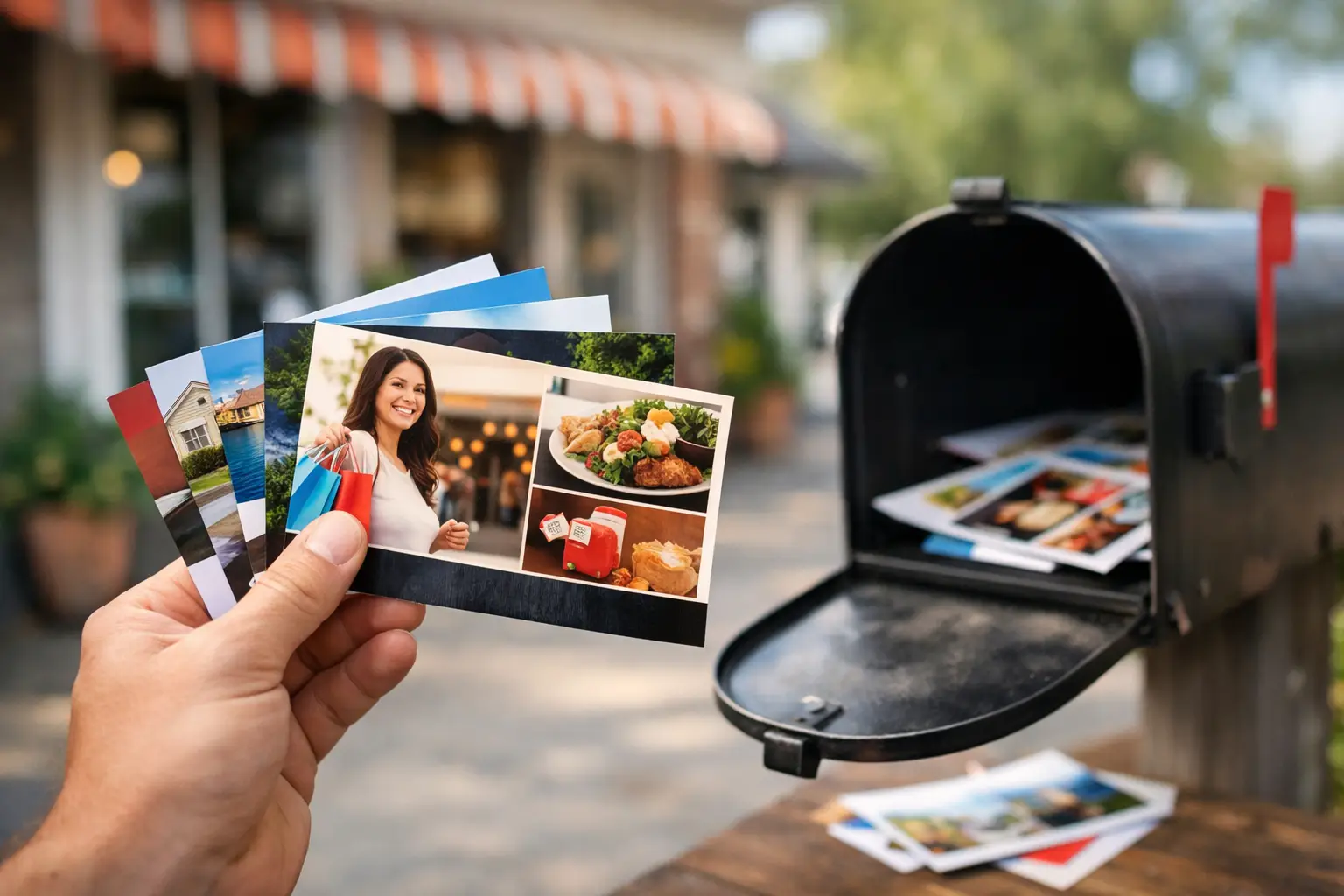
A new restaurant opening, a seasonal service special, or a real estate open house cannot wait for people to search online and happen to find it. Every door direct mail postcards put a clear offer directly into homes and businesses within the neighborhoods that matter most to your business. For Lancaster, Palmdale, and Southern California businesses that rely on local customers, that visibility can create immediate awareness and a steady source of new leads.
Unlike a campaign built around individual names and addresses, Every Door Direct Mail, commonly called EDDM, lets you mail to every delivery address on selected postal carrier routes. You choose the areas you want to reach, prepare a postcard that meets postal requirements, and distribute it through the mail. It is a practical option when your goal is broad neighborhood coverage without the added expense or maintenance of a traditional mailing list.
When Every Door Direct Mail Postcards Make Sense
EDDM postcards work best when location is a major part of the buying decision. A plumbing company can introduce a limited-time drain cleaning offer to homes near its service base. A local retailer can announce a grand opening to nearby households. An event promoter can build attendance in the communities closest to the venue.
This approach is also useful for businesses with a strong service radius. Landscapers, home improvement contractors, auto repair shops, insurance agencies, dentists, restaurants, gyms, and real estate professionals often need to stay visible in specific local markets. Repeated postcard campaigns can help residents recognize the name before they need the service.
The trade-off is targeting precision. EDDM reaches a geographic area, not a carefully filtered list of people based on past purchases, income, job title, or online behavior. If you need to speak only to existing customers or a narrow prospect profile, a targeted mailing list may be the better choice. If you need broad awareness across a neighborhood, EDDM is usually a more efficient fit.
Start With the Neighborhood, Not the Postcard
Many campaigns lose value because the offer is designed before the service area is defined. First, identify where the best prospects live, work, or shop. Consider where your current customers come from, which communities are closest to your location, and where a competitor’s message may be less established.
Postal carrier routes can be selected by geography and may include residential addresses, business addresses, or both depending on the route. A restaurant may want nearby homes and apartment communities. A business-to-business service may prefer areas with commercial delivery. A home services company may concentrate on neighborhoods with the types of properties it serves best.
Coverage size affects both budget and response expectations. Mailing a small number of routes can be a smart test, especially for a new offer. Mailing a larger area can build stronger name recognition, but only if your staff, inventory, and schedule can handle the response. There is little value in generating calls for a special you cannot fulfill promptly.
A dependable print-and-mail partner can help you review route choices, delivery counts, postcard specifications, and postal preparation before production begins. That planning stage protects your budget and helps ensure the finished piece is ready for distribution.
Design Postcards for a Fast Decision
A mailbox is a crowded place. Your postcard needs to communicate its purpose in seconds, not paragraphs. The front should make the offer or main benefit easy to see from a quick glance. Strong photography, a clear headline, and a professional logo help, but the message has to do the real work.
Lead with one central reason to respond. “$50 Off Your First Service,” “Free Consultation,” “Grand Opening This Saturday,” or “Schedule Before Summer” are clearer than a long description of every service you provide. You can add supporting details on the reverse side, but keep the main call to action direct.
Make it easy for the recipient to take the next step. Include a phone number, website, physical location if relevant, business hours, and any deadline or redemption instructions. If the offer requires conditions, state them clearly. Confusing fine print can reduce trust and create unnecessary questions for your team.
Color, paper stock, finish, and postcard size also affect how your company is perceived. A high-quality, full-color postcard gives a local business a more established presentation than a flimsy piece with crowded type. At the same time, the most expensive option is not automatically the best option. The right format depends on your offer, your audience, and how much information the piece needs to carry.
Postal rules require space for addressing and indicia, along with approved dimensions and preparation. Those requirements should shape the layout from the beginning. Trying to force a design into a postal template after it is finished can lead to costly revisions.
Make the Offer Worth Keeping
A postcard is more likely to stay on a counter or refrigerator when it gives people a real reason to keep it. That does not always mean a deep discount. For some businesses, urgency is more valuable: limited appointments, a seasonal deadline, a grand opening date, or a special event can all prompt action.
The offer should match the customer’s level of commitment. A first-time customer may respond better to a low-risk introductory service, free estimate, or consultation than to a high-dollar purchase. A retailer can use a coupon. A club or event organizer can highlight early registration or a date-specific promotion. Real estate professionals may offer a neighborhood market update or open house invitation rather than a generic sales message.
Avoid trying to sell everything at once. One postcard can introduce your business and move a prospect toward one action. If you have several services to promote, plan a sequence of mailings instead. Consistent messages over several weeks or months often outperform a single postcard sent once and forgotten.
Track Results So the Next Mailing Improves
Direct mail should be measured like any other marketing investment. Before your postcards go out, decide how you will identify responses from that campaign. A unique offer code, dedicated phone extension, specific landing-page address, or simple question at the point of contact can give you useful information.
Ask new callers how they heard about your company, and train the person answering the phone to record the answer. For a retail offer, count redeemed coupons. For an event, track registrations tied to the postcard. For home services, compare the number of calls, booked jobs, and revenue against the cost of printing and mailing.
Response rates vary by industry, offer, season, competition, and route selection. A campaign that generates fewer calls but produces several high-value jobs may be more successful than one with many low-value inquiries. Look beyond the first response count. The real measure is whether the campaign produces profitable customers and future business.
What a Full-Service Print-and-Mail Process Should Handle
Coordinating design, printing, route selection, postal paperwork, bundling, and delivery can pull attention away from running your business. A full-service provider brings those steps into one organized workflow, reducing the chance that an important detail gets missed between vendors.
For a successful EDDM campaign, the process should include these core steps:
- Review your goals, offer, service area, and ideal delivery timing.
- Select postal carrier routes that fit the audience you want to reach.
- Create or prepare a postcard design that meets print and postal requirements.
- Print, bundle, prepare, and submit the mailing for postal distribution.
At JR’S Handling, more than 34 years of direct-mail postcard experience helps businesses move from an idea to a finished local campaign without having to manage separate printers, list providers, and mail houses. That matters when you need professional quality, accurate preparation, and a practical timeline for a promotion.
Give Your Campaign Time to Work
Plan your mail date around the customer’s decision cycle. A restaurant promotion may need to arrive shortly before a weekend. A home improvement offer may perform better before a busy seasonal period. An event postcard should arrive early enough for people to make plans, with a possible follow-up mailing closer to the date.
Mail delivery timing can vary, so avoid building a campaign around a single exact day unless you have allowed enough lead time. It is also wise to make sure your phone coverage, online inquiry process, and front counter staff are ready before postcards begin arriving. A fast, helpful response protects the money you spent to generate interest.
Every door direct mail postcards are not a substitute for good service, but they are a dependable way to make sure local customers know you are there when they need you. Choose the right neighborhoods, present one clear offer, and work with a team that can manage the print and mail details. Give us a try today and put your next promotion in the hands of the people closest to your business.