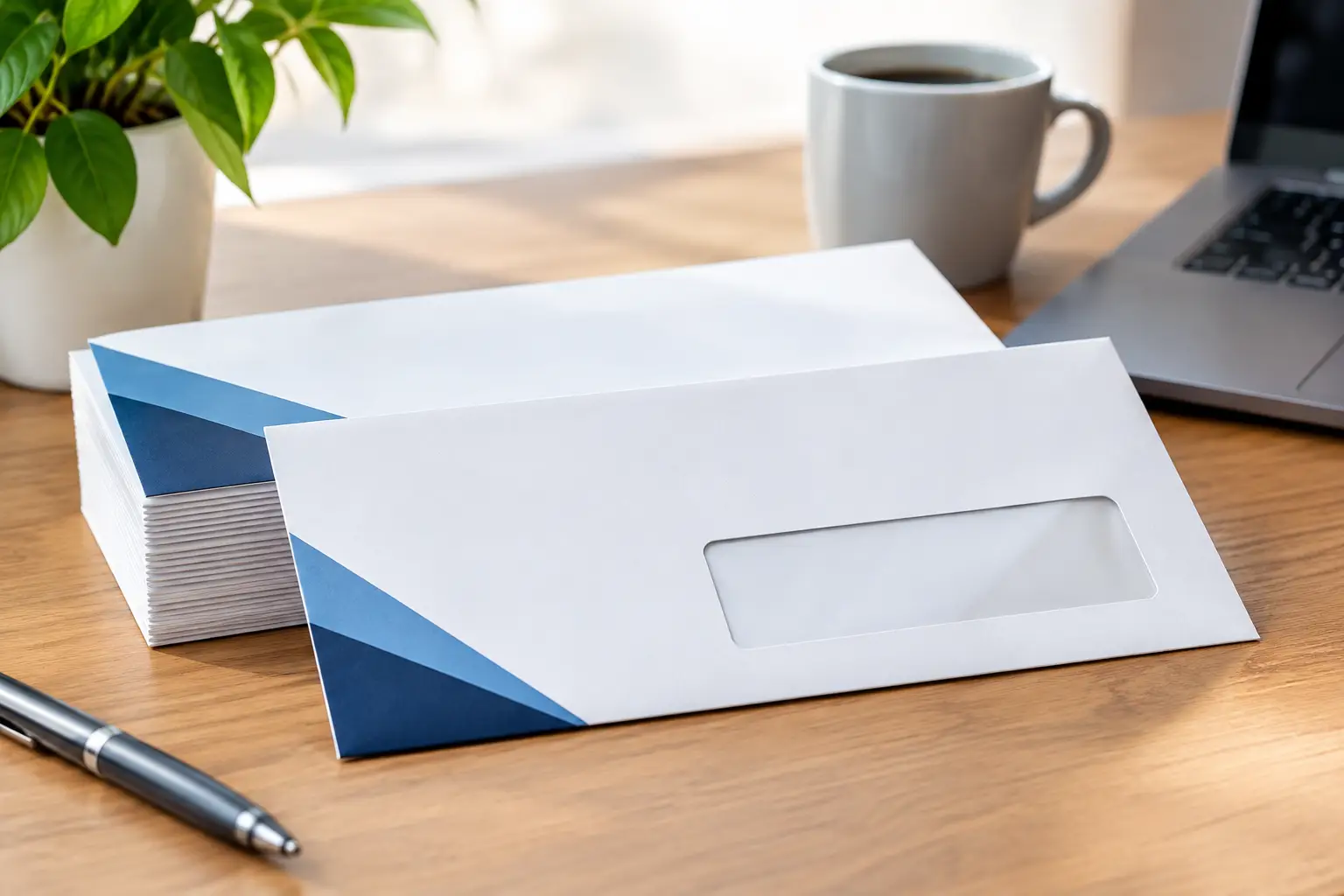
The envelope is the first thing a customer sees, and it often determines whether your message gets opened promptly or set aside. Custom envelope printing gives invoices, offers, event invitations, sales letters, and direct-mail pieces a professional appearance before the recipient reads a single word. For businesses competing for attention in Lancaster, Palmdale, and across Southern California, that first impression deserves more than a plain return address label.
A well-printed envelope makes the sender recognizable, supports the purpose of the mailing, and keeps everyday business communications consistent with the rest of your brand. The right choice depends on what you are sending, who needs to receive it, and whether the piece will travel through the mail or be handed out in person.
Why Custom Envelope Printing Matters
Envelopes are practical business tools, but they also carry your name into homes, offices, and mailboxes. A clean logo, accurate return address, and consistent brand colors signal that the contents are legitimate and worth reviewing. This matters for a service company sending estimates, a real estate professional following up with prospects, a retailer promoting a sale, or a club announcing an upcoming event.
Branded envelopes also reduce confusion. When customers recognize your business before opening the mail, they are more likely to connect the piece with a previous conversation, appointment, purchase, or local promotion. For recurring communications such as statements, invoices, and appointment reminders, recognizable envelopes help create a more organized customer experience.
There is a cost consideration, of course. Plain stock may be suitable for internal paperwork or very small mailings where presentation is not a priority. But for customer-facing communications, custom printing can provide value well beyond its added production cost by making the mailing look intentional, established, and easier to trust.
Choose an Envelope for the Job
The best envelope is not always the largest or most elaborate option. It should protect the contents, fit the mailing process, and leave room for the information required by the Postal Service.
A standard #10 envelope is a dependable choice for business letters, invoices, statements, and folded marketing letters. It fits common office documents and offers enough face area for a logo, return address, and a simple promotional message. Window envelopes can save time when the recipient address is already positioned on the enclosed document, though the layout must be set up carefully so every address appears correctly through the window.
Larger envelopes are useful for brochures, presentation folders, catalogs, event materials, and documents that should not be folded. A flat envelope may help preserve the appearance of premium print pieces, but it can cost more to mail because of its size, weight, or shape. Smaller invitation-style envelopes work well for gift certificates, special offers, thank-you notes, and event announcements.
Paper stock affects the result as well. A standard white envelope is economical and versatile. Premium uncoated stock can feel more substantial and may be better for correspondence that benefits from a personal touch. Colored envelopes can stand out, but they should still provide enough contrast for addresses and postal markings. If a piece is going through bulk mail, readability and postal specifications should guide the design.
Design the Front for Recognition and Delivery
The front of an envelope has competing jobs. It needs to identify your business, give postal equipment a clear delivery address, and avoid looking cluttered. The most effective designs keep these priorities in order.
Place your logo and return address where customers expect to find them, usually in the upper-left corner. Use type that remains readable at small sizes, especially for phone numbers and suite numbers. A full-color logo can add polish, while one-color printing is often a cost-effective choice for high-volume mailings. The right option depends on your brand standards and campaign budget.
Leave the recipient address area open and easy to read. For mailed pieces, this is not the place for heavy background graphics, large slogans, or design elements that interfere with addressing. The upper-right corner must also remain available for postage or an approved permit imprint. A professional printer can help you account for these clear zones before production begins.
A short message can work when it supports the mailing. Phrases such as “Important Information Enclosed,” “Your Appointment Details,” or “A Special Offer for You” can add context without overdoing the sales pitch. The wording should match what is inside. If the envelope promises a discount, the enclosed piece needs to make that offer clear and easy to use.
Match the Envelope to Your Direct-Mail Campaign
For direct mail, the envelope is part of the campaign, not an afterthought. It works alongside the mailing list, postage method, printed offer, and response instructions. A strong postcard can stand on its own, but a letter package depends on the outer envelope to earn the open.
Start with the audience. A neighborhood service business may use a recognizable logo and a direct local offer. A financial, legal, or healthcare-related office may need a more restrained design that emphasizes privacy and professionalism. An event promoter may choose a bolder color or larger format to create anticipation. There is no single design that works for every business or every mailing list.
Then consider the action you want recipients to take. If the goal is to call for an estimate, schedule a service, visit a sale, or redeem an offer, keep the envelope message aligned with that action. The enclosed letter, brochure, or response card should continue the same message and make the next step simple.
Timing matters too. A seasonal offer must arrive before the buying window closes. Event invitations need enough lead time for people to respond. Recurring monthly mailings benefit from consistent production schedules and accurate address management. Coordinating print and mailing through one provider can reduce delays between approving artwork, addressing envelopes, applying postage, and entering pieces into the mail stream.
Prepare Your Artwork Before Printing
Good envelope printing begins with complete, accurate files. Your artwork should include the finished envelope size, logo placement, return address, colors, and any messaging on the front or back. If variable recipient addresses will be printed, the mailing data and artwork need to work together from the start.
Use high-resolution logos and images so they reproduce clearly. A blurry logo or thin type can look especially poor on an envelope because the printable area is limited. Brand colors should be specified consistently, and important text should not sit too close to folds, seams, or the edge of the envelope.
Proofing is essential. Check spelling, phone numbers, website text, suite numbers, and postal abbreviations. Confirm that the envelope matches the documents going inside it. It is much easier and less expensive to correct a proof than to discover an error after a full run has been printed and mailed.
For campaigns with thousands of addresses, data accuracy matters just as much as print quality. Duplicate records, incomplete apartment numbers, and outdated addresses can waste postage and reduce results. List support and address cleanup can help businesses target the right households or customers more efficiently.
Keep Everyday Communications Professional
Custom envelopes are not only for promotional mail. They strengthen routine communications that customers receive throughout the year. Statements, invoices, estimates, contracts, welcome packets, and follow-up letters all represent your business.
A consistent envelope program can also simplify ordering. Rather than placing a new order each time supplies run low, businesses can establish approved artwork and reorder the quantities they need. This is useful for offices with steady correspondence and for sales teams that need materials ready when opportunities arise.
JR’S Handling helps businesses combine commercial printing with direct-mail coordination, so envelopes can be produced as part of a larger project instead of managed through separate vendors. Whether you need business envelopes for daily operations or a coordinated mailing package for a local campaign, the goal is the same: clear presentation, reliable production, and materials that support growth.
Before your next mailing goes out, look at the envelope as your customer will see it: alone, in a crowded mailbox, with only a few seconds to make an impression. Give it a clear reason to be opened, a professional reason to be trusted, and a design that represents your business well. Give us a try today.